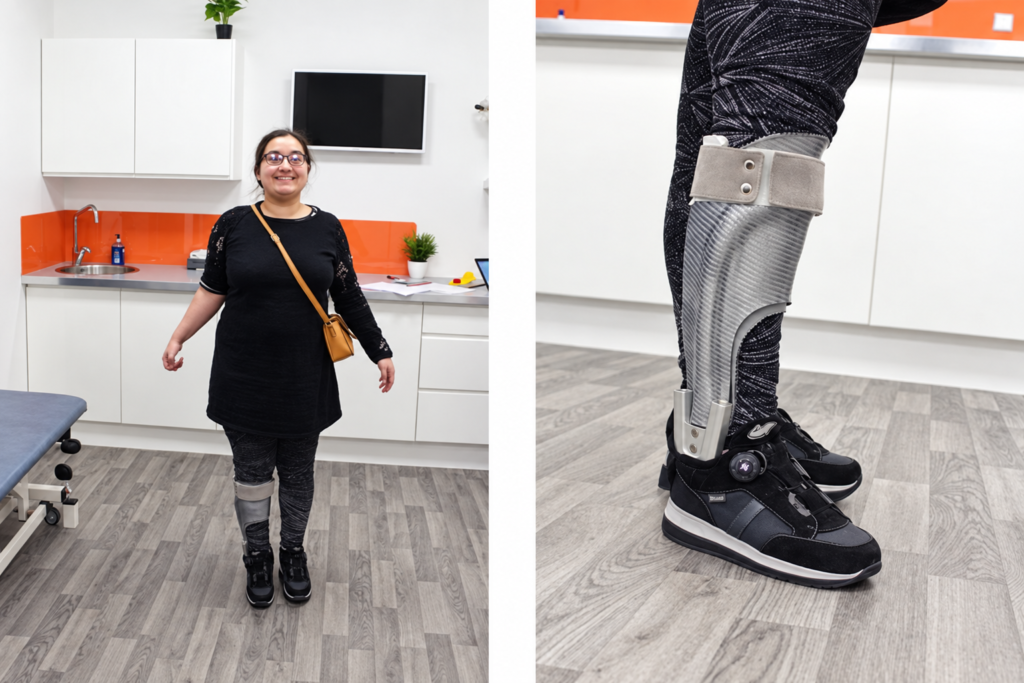
March marks the start of Cerebral Palsy Awareness Month and to spread awareness we are having a look at how Ankle Foot Orthoses can help patients with Cerebral Palsy or brain injury learn to walk again.

Most people think of shoe inserts when they hear the term ‘orthotics’, but they often underestimate their potential for making a life-changing difference for people with reduced or limited ability to walk. The human foot is a complicated biomechanical structure; each one contains 26 bones.

Cerebral palsy is a neurological disorder caused by brain injury either before, during or after birth. It can mean that a person diagnosed with cerebral palsy struggles with controlling their muscle movements as they grow. In the UK, cerebral palsy affects one in every 400 children and symptoms vary from person to person. Terms like monoplegia, hemiplegia, diplegia and quadriplegia refer to the part of the body that is specifically affected; one limb, half the body, two limbs and all four respectively.

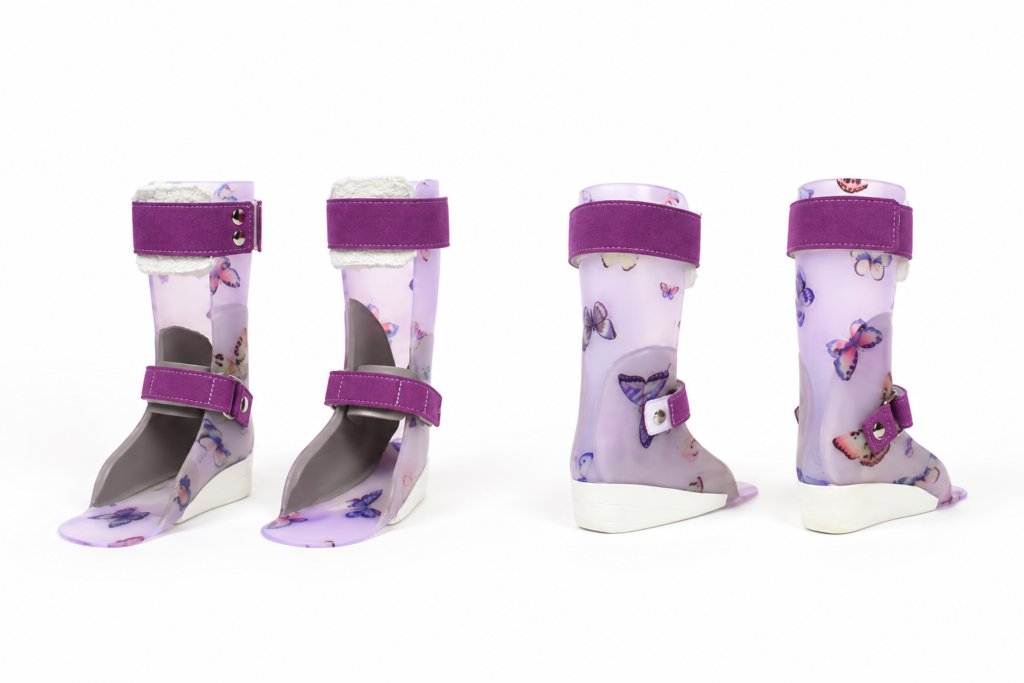
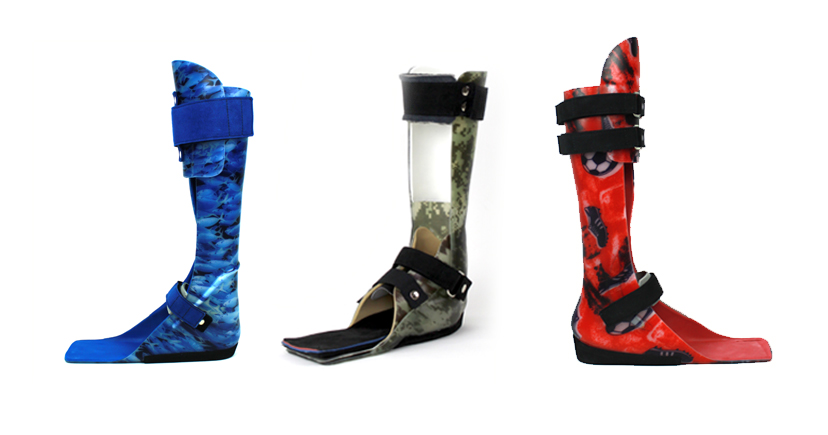
An Ankle Foot Orthosis (AFO) can either be fixed in one position, allow a slight degree of movement or allow a full range of movement in one plane while controlling movement in all other planes. AFOs should first and foremost protect bones and joints from the abnormal gait patterns and loading that CP can create. In doing so, they should also try to produce a normal gait pattern by controlling the forces and mimicking their interaction with the body in that of normal gait.

The use of correctly prescribed AFOs in Cerebral Palsy can have wide-reaching positive effects, such as:

The development of correct walking patterns from a young age

  • Protecting the foot from deformational forces
  • The development of the bones in the foot
  • The development of the long bones in the leg
  • The development of the hip bones
  • Prevention of contractures in soft tissue
  • Improved stability and balance
  • Reduced need for surgical intervention
  • Giving a child the chance to walk


Unfortunately, the inverse is also true; incorrectly prescribed orthoses or poorly made orthoses can have a negative effect on a child’s development and future.

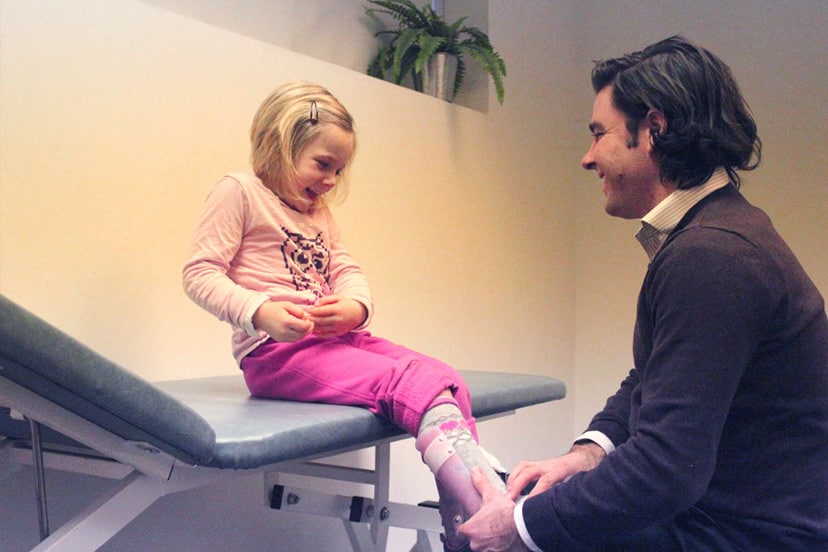
Providing high-quality orthotic care requires time, specialist knowledge, detailed assessment and the right facilities. At our Kingston clinic, our orthotists use advanced gait analysis and work closely with our on-site manufacturing team to assess, design, fit and review bespoke orthoses around each patient’s individual needs.

SDR Surgery

Some young children who are diagnosed with cerebral palsy will undergo Selective Dorsal Rhizotomy (SDR) surgery in order to reduce the spasticity and movement of their muscles. After this surgery, orthoses can play a crucial part in the rehabilitation process. Although their movement will have improved as a result of the operation, the AFOs will help them learn to use their new movement correctly and safely with support.

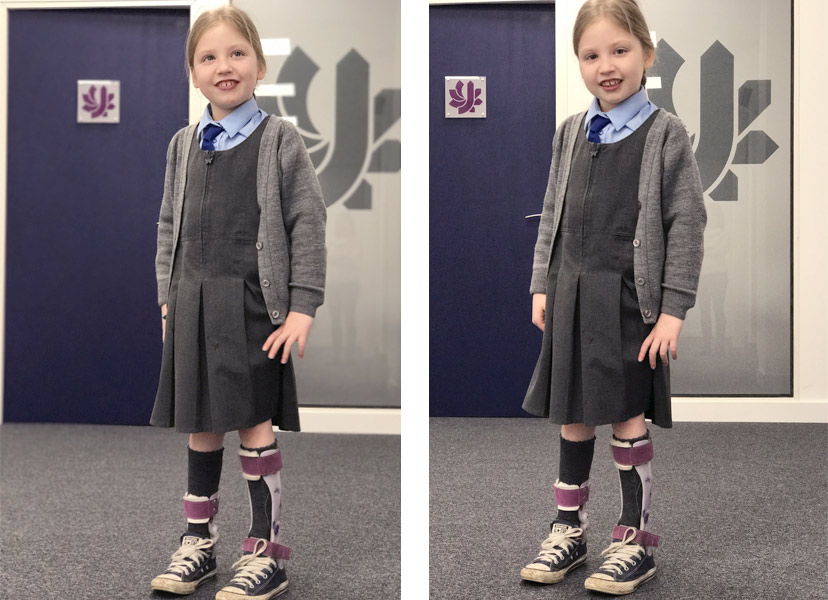
Here at LOC, we have seen numerous children through their rehab process post-SDR. We have a case study of a seven-year-old cerebral palsy patient who underwent SDR surgery at Great Ormond Street Hospital aged 5 years. LOC has been involved in her rehabilitation from the age of 18 months. Over that time we have made a mixture of AFOs and Hinged SMOs.

They have all been prescribed using our Gait Lab facility and using a careful algorithm based on the OSKAR (Optimal Segmental Kinematics and Alignment Approach to Rehabilitation) principles. Her walking is always carefully monitored to ensure both kinetics and kinematics are optimal. As she is still growing, LOC will continuously review her orthoses and will refit them when required.

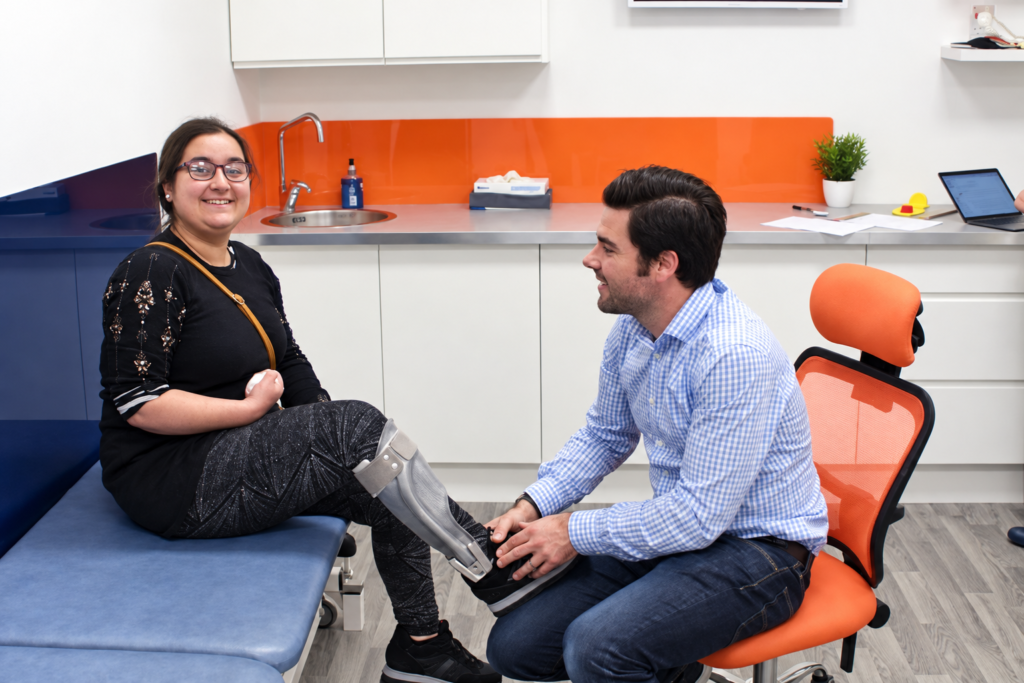
Clinician Sam Walmsley has been overseeing her treatment since the first appointment and has seen her incredible progress. He explained, “I first saw her when she was one, and I’ve made her AFOs since that point. She has worked with Elaine Owen in the Gait Lab and we have helped align and optimise the function of the AFOs.

“After her SDR surgery at Great Ormond Street, we managed to get her out of one of her fixed AFOs and into a hinged pair, allowing some movement. So, we’ve managed to reduce the prescription for part of her day, enabling her to do more of the things she wants to do at school like climbing up climbing frames.”

Silver Carbon AFOs for Brain Injury Patient

In December 2017, LOC treated a 19-year-old woman with an acquired brain injury that affected her mobility and muscle control. Following an assessment in LOC’s Gait Lab, she was fitted with a bespoke AFO. At the time this article was originally published, she was walking with improved hip and knee extension.

Sam adds “She is now having treatment on her right hand as she was not getting enough wrist extension. We’ve suggested a lycra gauntlet with a wrist extension panel to see if that makes a difference.”

The Lycra gauntlet can help improve proprioception on an affected limb. In this case, we wanted to improve her wrist extension. We didn’t want anything too bulky and used Lycra to make her more aware of her arm and wrist and therefore able to use it better.

LOC has developed a reputation in the SDR community for its treatment and management of patients who have undergone this life-changing surgery. Our clinicians are also highly experienced in orthotic treatment to improve gait following a brain injury.

If you think you, or someone you know, could benefit from an Ankle Foot Orthosis, please get in touch via the contact form at the top of the page, or give us a call on 0208 9749 989.

Bespoke orthotics to improve your walking pattern with drop foot

Whatever the cause of your drop foot, we can help. With a detailed biomechanical and gait assessment, we can design entirely custom orthotics and insoles to meet your individual requirements.

Allowing you to regain your step with improved stability, comfort, and confidence.

Get in touch for a free online orthotic consultation

Speak to our team about your options, with no obligation to begin treatment.

Not sure which appointment to book?

  • New patients: Please book an Assessment.
  • Existing patients: Please book a Review.

If you can’t find a suitable appointment, please contact us and our admin team will be happy to help.

020 8974 9989
Maximum file size: 2MB. Accepted file types: JPG, JPEG, PNG

By submitting this enquiry form you agree to our terms & conditions as outlined in our privacy policy. We will never sell your data and have strong security.