We’re happy to answer any questions you might have, with no commitment to proceed with treatment.
We use cookies where necessary to allow us to understand how people interact with our website and content, so that we can continue to improve our service.
We only ever receive anonymous information, and cannot track you across other websites.
View our privacy policyThe Optimal Segmental Kinematics and Alignment approach to Rehabilitation (OSKAR) is a therapeutic approach involving the use of orthoses for children and adults with conditions that affect the lower limbs including cerebral palsy and spina bifida.

OSKAR was originally developed by Elaine Owen MBE MSc SRP MCSP, a physiotherapist recognised internationally for her work in clinical gait analysis and orthotic biomechanics. Her approach has influenced how clinicians think about alignment, stability and function in lower-limb orthotic care
Our team uses OSKAR principles to guide assessment, orthotic prescription and review for children who may benefit from this approach.
OSKAR grew from Elaine Owen’s clinical work with children and families, through detailed gait observation and analysis. Over time, her work shaped a structured way of understanding standing and walking, and orthotic management:
Today, OSKAR is closely associated with a high standard of orthotic care, where decisions are based on the measurement and analysis of alignment, movement and forces.
OSKAR is strongly linked with gait analysis. Our gait laboratory helps us understand your child’s walking:
This allows us to:
OSKAR stands for Optimal Segmental Kinematics and Alignment approach to Rehabilitation.
In practice, it means we look closely at how your child moves, then use orthoses and footwear strategies to support alignment and function in a way that fits your child’s everyday life.
The OSKAR clinic follows a structured clinical pathway. The steps usually include:
Each child is evaluated, to understand their abilities and challenges.
The gait laboratory is used to study the child’s walking patterns in detail..
Based on the assessment and gait analysis, and in collaboration with the family, goals are set.
Orthoses, such as AFOs, and footwear, are then carefully designed, manufactured and fitted. followed by optimisation of design and alignments using the gait laboratory.
Progress and goals are regularly reviewed, with adjustments made to the orthoses as needed.
This step-by-step approach ensures that every aspect of the child’s mobility is carefully considered and optimised.
The OSKAR clinic is for children with conditions that affect the lower limbs. This often includes neurological conditions, such as:
Every child is different, so we use an individual assessment process to understand what matters most to your child and family.
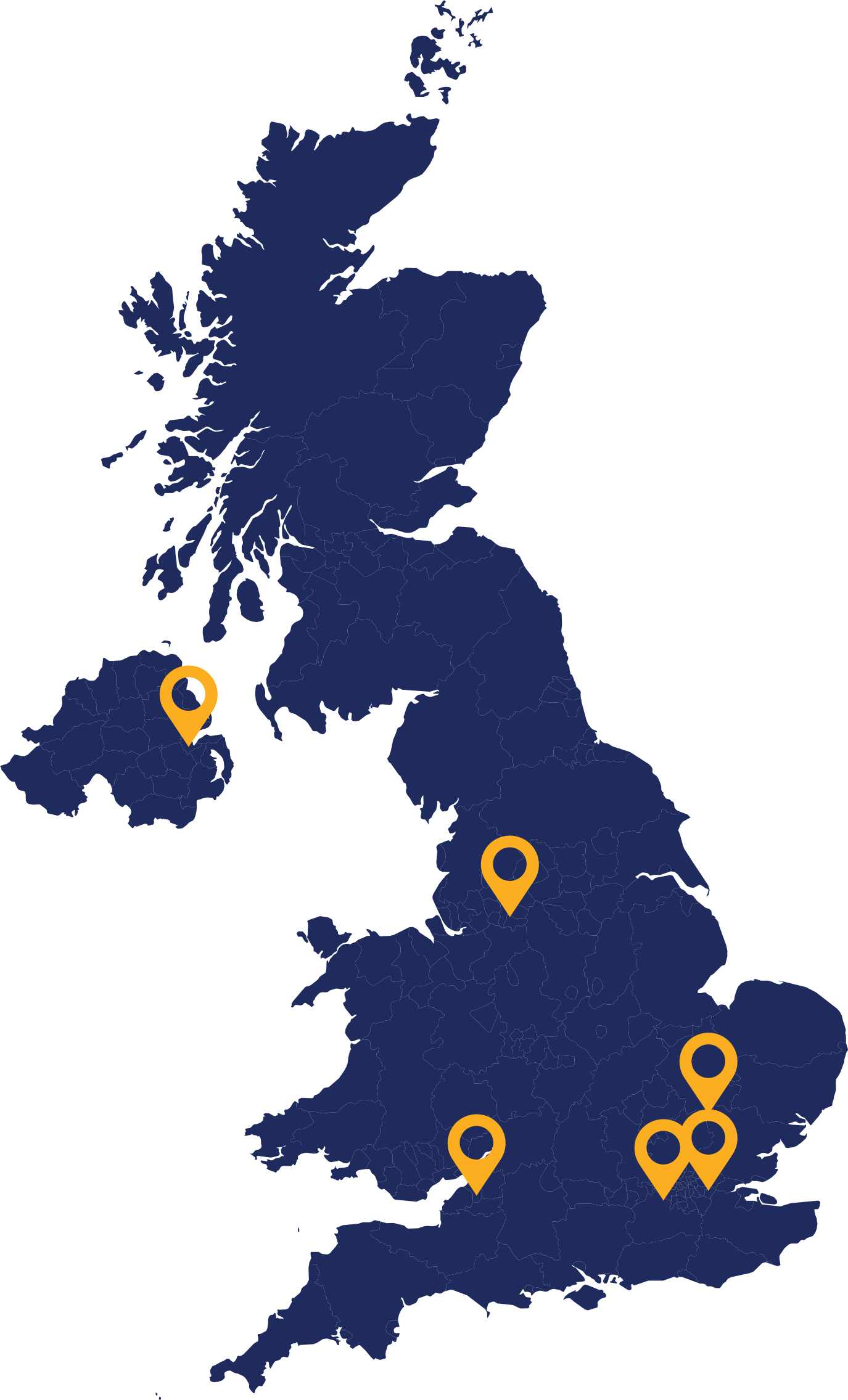
The OSKAR Clinic is available at:
Elaine Owen is a physiotherapist with over 50 years of experience specialising in movement disorders in children. Her work focuses on understanding how children walk, and designing orthoses (such as Ankle-Foot Orthoses, or AFOs) and footwear that optimise their movement.
At LOC, we aim to support children using OSKAR to:
At LOC, we specialise in designing clinically-led, bespoke orthotics that make a meaningful difference to patients with cerebral palsy. Our orthotics don’t just offer support, they’re precision tools used to improve mobility, stability and gait, based on in-depth assessment and advanced biomechanical analysis.
Every orthosis we create is the result of careful planning, goal-setting and fine-tuning, tailored to support each child’s development and unique functional needs. Giving children the best possible foundation for movement, independence and participation.

We’re happy to answer any questions you might have, with no commitment to proceed with treatment.