We’re happy to answer any questions you might have, with no commitment to proceed with treatment.
We use cookies where necessary to allow us to understand how people interact with our website and content, so that we can continue to improve our service.
We only ever receive anonymous information, and cannot track you across other websites.
View our privacy policyImprove your mobility, reduce fatigue and manage symptoms of post-polio syndrome with bespoke orthotics

Post-polio syndrome (PPS) is a progressive condition that affects individuals who had polio, often decades after their initial recovery. Symptoms include new or worsening muscle weakness, fatigue, and mobility issues.
Many PPS patients experience weakness in previously unaffected areas, leading to instability and pain.
As muscle weakness increases, stability and energy efficiency become major concerns.
Patients often seek alternatives to standard callipers and splints, looking for orthotic solutions that offer better comfort, support, and durability.
Bespoke orthotics can:
Specifically, carbon fibre orthotics and innovative technology like the Neuro HiTronic Knee Ankle Foot Orthosis (KAFO) can benefit post-polio patients.
Over the years, Dr Robin Buxton adapted to life with Post-polio syndrome, relying heavily on his walking stick. However, as his condition worsened and falls became a yearly occurrence, he sought medical advice. An orthopaedic surgeon at St Thomas’ Hospital advised him that NHS orthotics wouldn’t be able to manage the severity of his knee contractures but suggested a private specialist like the London Orthotic Consultancy might help. He met with Sam Walmsley, LOC’s director and senior orthotist, in 2019.
Robin’s gait was complex. His right side was more severely affected, but he also had drop foot on the left. Over time, Robin had unconsciously learned to control his right knee with his hand while using a stick for balance. To improve his mobility, Sam prescribed a carbon-fibre, stance control Neurotronic KAFO for his right leg to provide maximum stability, along with a stretching KAFO for his left leg to improve knee movement.

Traditional orthotics for post-polio syndrome are typically callipers made from heavy metal, leather and rigid thermoplastics.
The main issue is their excessive weight. Metal and leather constructions are heavy, requiring more energy to walk and increasing strain on the body. They also have the capacity to cause discomfort and skin irritation from rubbing.
In contrast, modern bespoke orthotics use lightweight carbon fibre and titanium, offering better comfort, durability, and mobility for post-polio patients.
Many patients find that their previous orthotic solutions no longer meet their needs as PPS progresses, requiring a review of their treatment options.


Every orthosis we create is designed specifically for you. From materials and lining to function and fit, we ensure that each device works seamlessly with your footwear and daily activities.
Using state-of-the-art gait analysis, we assess how you move to create orthotics that truly support your unique biomechanics. This allows us to fine-tune your device for maximum efficiency. Whether it’s improving balance, reducing strain, or enhancing performance.
Our advanced 3D scanning technology replaces traditional plaster casting, making the process faster, easier, more accurate and more comfortable for patients while ensuring highly precise measurements.
We incorporate the latest innovations in orthotic design, from dynamic support systems to advanced joint mechanisms that enhance mobility, improve alignment, and optimise rehabilitation outcomes. These technologies allow for better adaptability, supporting natural movement and long-term comfort.
We manufacture the majority of our orthotics in-house at our workshop in Kingston, ensuring exceptional quality control at every stage. This hands-on approach allows us to fine-tune each orthosis to the patient’s unique needs, make adjustments quickly, and maintain the highest standards of craftsmanship.
Orthotics can only work as well as the shoes they go into. That’s why footwear is never an afterthought in our process, it’s a key part of every assessment. We always look at your current footwear and provide tailored advice to ensure you’re getting the most out of your orthotics.
We’ve successfully treated many post-polio syndrome patients (PPS) over the years with bespoke orthotics, insoles and footwear.
The best way to find out which orthosis is right for you is to book an appointment with one of our experienced clinicians. We can carry out a detailed assessment in our gait lab and work with you to achieve your personalised treatment goals.
Below, you’ll find some of the more common types of orthotics we prescribe for post-polio syndrome.

The Neuro HiTronic System Knee Joint KAFO is an advanced electro-hydraulic knee joint designed by Fior & Gentz for use in a Knee-Ankle-Foot Orthosis (KAFO). This state-of-the-art technology enhances stability and mobility by using movement sensors to detect lower leg motion, allowing automatic locking and unlocking of the knee joint.
By providing smooth transitions and dynamic adaptability, the Neuro HiTronic KAFO significantly improves mobility, safety, and quality of life for individuals with complex mobility challenges.

Bespoke carbon fibre orthotics represent a groundbreaking advancement in mobility solutions and offer several advantages over traditional plastic orthotics, making them a superior choice for many patients, particularly adults. Carbon fibre offers unparalleled strength and durability, while remaining incredibly lightweight.
By reducing bulk and energy expenditure, users can walk further, faster, and with greater comfort. They’re also slimmer than traditional plastic orthotics, making them easier to fit inside regular shoes.
Plus, carbon fibre offers excellent energy return, helping with push-off during walking, improving efficiency and reducing effort. This can help patients walk faster and with less fatigue, especially beneficial for active users.

The Neuro Swing system is an adjustable, dynamic ankle joint system designed to improve gait, stability, and rehabilitation. We commonly integrate them into carbon fibre Ankle Foot Orthoses (AFOs).
Unlike traditional fixed AFOs, this system allows some natural movement if the patient retains some muscle activity. The system allows tweaks and adjustments for different ankle alignments, allowing us to optimise for comfort and individualise adjustments based on your specific needs.
All this allows a more natural gait pattern, protecting bones and joints from abnormal stress. Not only does this benefit your ability to walk in the short-term, it also protects the bones and joints and encourage your muscles to work correctly.
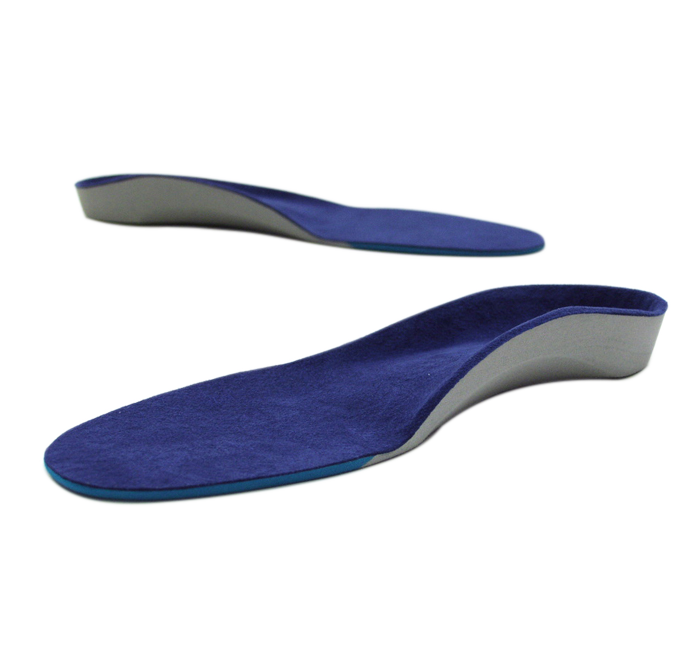
Bespoke insoles are custom-designed orthotic devices tailored specifically to your feet to address individual foot shape, biomechanics, and any existing conditions.
Unlike over-the-counter insoles, bespoke insoles are created after a thorough biomechanics assessment using accurate scanning technology and clinical evaluation. This ensures you get a precise fit and effective treatment tailored to your specific goals. They provide a non-invasive solution for a range of foot and posture-related issues, offering comfort, support, and improved mobility.

Custom footwear is tailored to accommodate unique foot shapes and alignments. They offer better comfort, support, durability and are often used alongside other lower-limb orthotic devices like AFOs or SMOs.
At LOC, we’re committed to delivering high-quality footwear that meets both your clinical and aesthetic needs. We can provide a complete range of footwear, from simple, extra volume high street style shoes, to complex, bespoke orthopaedic and diabetic footwear.
Whether you need extra-depth shoes, modular modifications, or fully bespoke orthotics, our team will guide you through the process to find the best solution for you.
We’re happy to answer any questions you might have, with no commitment to proceed with treatment.