


Speak to our team about your options, with no obligation to begin treatment.
If you can’t find a suitable appointment, please contact us and our admin team will be happy to help.
We use cookies where necessary to allow us to understand how people interact with our website and content, so that we can continue to improve our service.
We only ever receive anonymous information, and cannot track you across other websites.
View our privacy policyOur treatment approach combines bespoke chest bracing and targeted exercises, which can improve chest shape appearance and symmetry without surgery.

Pectus carinatum is a chest wall deformity that causes the breastbone (sternum) to become pushed outwards. We’ve offered pectus bracing in the UK since 2010, supporting patients of different ages seeking improvement in their chest shape through personalised orthotic treatment programmes.
Treatment options depend on a few factors, such as:
Our non-surgical treatment package involves:
We’re committed to providing care that feels comfortable and personalised. Patients can choose to have a female or male orthotist for their pectus treatment if they prefer.
Booking a free video consultation with one of our orthotists can help determine whether bracing may be appropriate.
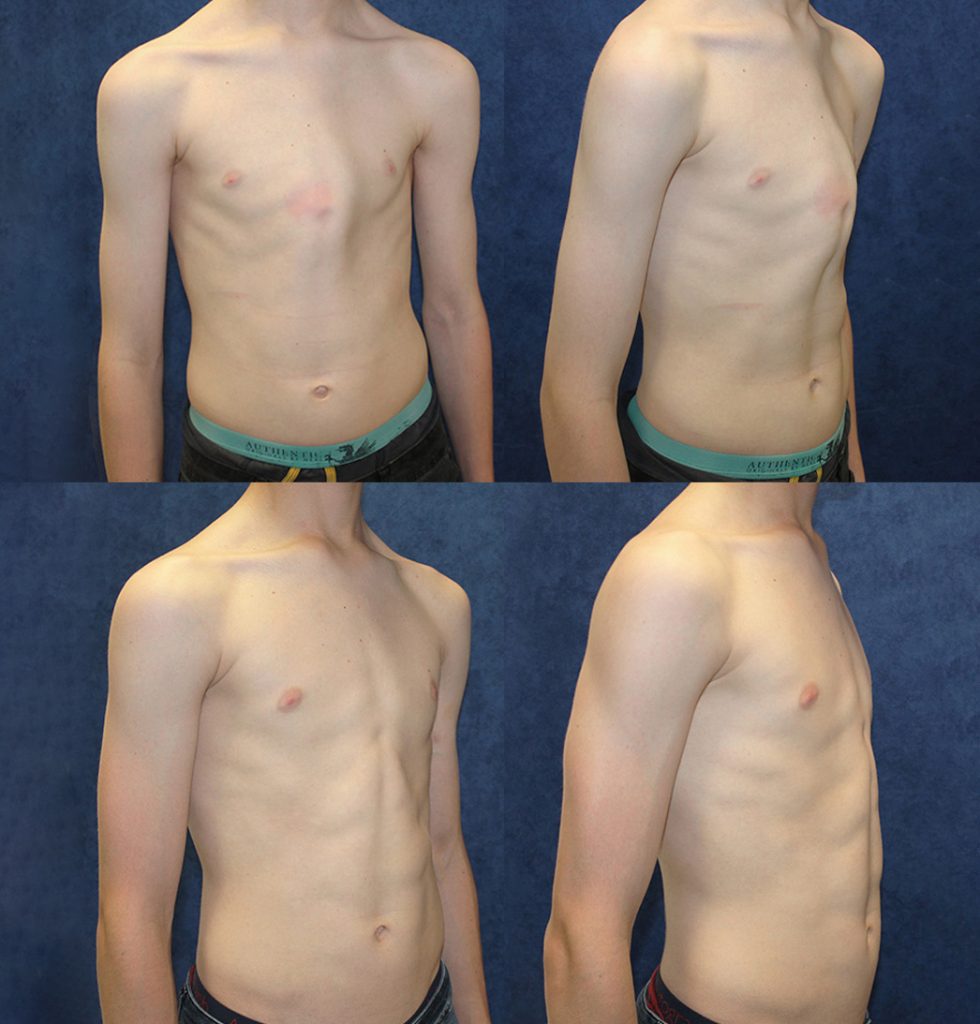
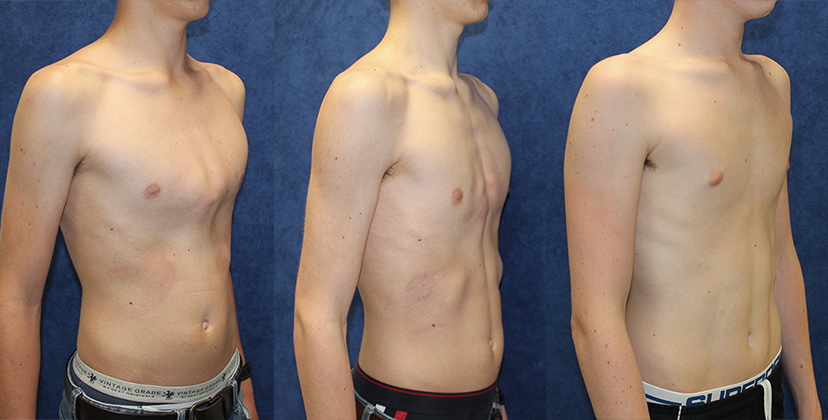
Ben came to see us when he was 14 years old, with pectus carinatum and rib flaring. He’d only previously been offered surgical solutions on the NHS and knew surgery was something he wanted to avoid.
His age and presentation meant he was considered suitable for bracing following assessment. After the brace was fitted, he started to notice changes in his chest shape after wearing the dynamic chest compressor and rib flaring brace for only a short period of time.
“His treatment lasted a total of 15 months, but he reported noticeable improvement in his chest shape within the first six months,” says Senior Orthotist Sam Walmsley. “The remaining nine months consisted of night-time brace use only, in order to maintain the much-improved appearance throughout his growth spurts.”
Lightweight, discreet, and easy to wear, the dynamic chest compressor is a custom-fit orthosis designed to apply gentle, controlled pressure.
This may help support gradual improvement in chest shape and appearance over time.
Many patients experience rib flaring as part of pectus carinatum. Our secondary rib brace applies gentle pressure to the lower ribs and may help improve their appearance over time, supporting a more balanced chest appearance.
This is because in some cases, changes in the breastbone position may make rib prominence more noticeable, causing the ribs to stick out (become ‘flared’).

A discreet, streamlined fit makes the brace less noticeable under clothing. Making it easier to wear and helping you feel more confident during treatment.
Our new design uses lighter-weight aluminium bars, making it easier to wear, carry about, and integrate into your daily life.
Fabric straps make it easy to put the brace on and take it off quickly and by yourself.
The new fastening system allows you to tighten the brace more easily should you wish. This allows you to increase or decrease the pressure depending on your comfort levels.
The brace’s soft, removable foam pads are easy to clean and swap out during treatment. This means we can increase the pressure points and adjust the brace as your chest shape changes.


Providing non-surgical orthotic treatment since 2010, with ongoing refinements to support effective and comfortable brace use.
Regular communication and check-ins with your dedicated orthotist keep patients and parents motivated throughout treatment.
Which means our orthotists can make any necessary adjustments or tweaks to the brace to make sure it’s comfortable and working effectively and comfortably.
In addition to chest wall shape, we may assess posture and biomechanics where appropriate, to support a well-rounded orthotic management approach.
Many patients seek treatment because they feel self-conscious about their chest shape. Our aim is to help you feel better about your chest shape and feel more confident through a personalised orthotic treatment approach.
Treatment duration varies between patients and depends on factors such as chest wall flexibility, age, and adherence to brace wear.
Some people may notice changes earlier in treatment, particularly where the chest wall is more flexible. Others may require a longer period, including adults, where changes may occur more gradually.
Regular reviews allow your orthotist to monitor progress and adjust treatment as needed.
As part of our core treatment package, we offer tailored pectus exercise classes with Alva Yoga specifically designed to complement our patients’ non-surgical chest bracing treatment.
Alva runs two online classes a week, one flexibility class and one muscle loading class.
Flexibility class: Focuses on opening the shoulders and chest, building strength in these areas, as well as in the legs and back muscles. The objective is to lengthen the spine, increase flexibility, and improve mobility, all of which contribute to promoting a better posture.
Loading class: Concentrates on building up chest muscles through a combination of strengthening and flexibility exercises. This class aims to enhance overall strength and structural support in the chest area.
Learn more about how tailored exercises can improve bracing treatment outcomes

We’re committed to always being as transparent as possible with our treatment costs. If you have any questions, please feel free to ask.
*Not all patients require a rib flaring brace. As a result, they are not included in the treatment package prices and are charged for separately.
We believe in the power of bespoke orthotics to change lives. That’s why we’re committed to providing the best possible treatments for our patients.


View some of the most asked questions about Pectus carinatum bracing treatment here, or search below for a question you might have.
Don’t forget you can always send us a message or give us a call on 020 8974 9989 if you’d prefer.
You may notice changes in chest shape during adolescence as the body grows. After skeletal maturity, the shape of the chest wall often stabilises.
If you have concerns, an orthotic assessment can help you understand whether treatment options may be appropriate at your stage of development.
Treatment duration varies between individuals depending on factors such as age, chest wall flexibility and brace wear.
Some patients may complete treatment within several months, while others may require a longer period. Wearing the brace as advised may support better outcomes.
Some patients may experience mild skin irritation or bruising, particularly in the early stages of treatment.
This should be monitored by your orthotist. If you notice significant discomfort, bruising, or skin changes, you should contact your orthotist, as the brace may need adjustment.
Treatment duration varies depending on factors such as your age, chest wall flexibility and how consistently the programme is followed.
In many cases, treatment may take between six months and two years. We’ll review your progress regularly and adjust your plan as needed.
For some patients, orthotic bracing may provide an alternative to surgery.
Suitability depends on individual factors such as age, chest wall flexibility and presentation, and should be assessed by an orthotist or appropriate medical professional.
Consistency is key for effective treatment and wearing the brace as advised is an important part of treatment.
Reduced wear time may affect how the chest responds to treatment. Your orthotist will provide guidance on a suitable wearing schedule.
Case studies are examples of individual patients’ experiences and may not be typical. Treatment suitability and outcomes vary between patients and are not guaranteed. A full clinical assessment is required before any orthosis is prescribed.
Speak to our team about your options, with no obligation to begin treatment.
If you can’t find a suitable appointment, please contact us and our admin team will be happy to help.
You can book a range of assessment and review appointments online, depending on the service and location that you require. If a specific appointment type is unavailable online, please contact LOC directly on [email protected] or you can call us. Unfortunately we are unable to offer fittings online at the moment.
Yes, if your previous orthotist offers online booking and has availability, you can choose to book with them again.
Please check your spam or junk folder first. If you still haven’t received a confirmation within 10 minutes, contact LOC Admin to confirm your booking via [email protected]
Yes. You can book on behalf of someone else. Please ensure the registration form includes the details of the person attending the appointment.
No account is required. Our booking process allows you to book as a guest. However, you will be asked to enter key details and complete required forms.
Most orthotic treatments are available online. If the treatment you’re looking for is not listed, please contact us directly and LOC Admin will assist you.