



We’re happy to answer any questions you might have, with no commitment to proceed with treatment.
We use cookies where necessary to allow us to understand how people interact with our website and content, so that we can continue to improve our service.
We only ever receive anonymous information, and cannot track you across other websites.
View our privacy policyJoint hypermobility syndrome, or hypermobility, is when your joints move beyond the normal range of motion. It’s also described as being double-jointed.

Hypermobility refers to excessive joint movement due to lax connective tissue. It can be a benign trait or linked to conditions like hypermobility spectrum disorder (HSD) or Ehlers-Danlos syndrome (hEDS)
While some individuals remain symptom-free, others experience pain, instability, fatigue, and recurrent joint subluxations, particularly in weight-bearing joints.
Orthotic intervention may be beneficial when hypermobility leads to:
Bespoke orthotics are an effective way to manage hypermobility, allowing for maximum function while stabilising the joint.
In the short-term, bespoke orthotics and insoles can:
In the long-term, they can:
For children, bespoke orthotics provide crucial support for muscles and joints while they are still growing, ensuring that their walking pattern develops correctly.
Gus was born with severe hypermobility, which left him unable to walk.
Due to the covid pandemic, his early care was delayed, and his condition went undiagnosed until an osteopath noticed his symptoms and recommended specialist orthotic treatment. At nearly two years old, he was assessed by Connor Mumford at the London Orthotic Consultancy’s Cambridge clinic, where he was prescribed bespoke ankle-foot orthoses (AFOs) for support.
Within weeks, Gus’s mum noticed a huge transformation. His ongoing treatment will help his muscles strengthen naturally, with the goal of eventually transitioning to just using insoles.
“There is no stopping him now. He’s even able to play football, which is really difficult to believe, the improvement has been so rapid.”

Hypermobility presents in a broad spectrum, and no single orthotic solution fits all. A detailed assessment with an experienced orthotist is essential to determine the most appropriate intervention, tailored to each individual’s unique circumstances, goals, and functional needs.
A personalised approach ensures optimal support, addressing specific challenges while promoting mobility, comfort, and long-term joint health.

Every orthosis we create is designed specifically for you. From materials and lining to function and fit, we ensure that each device works seamlessly with your footwear and daily activities.
Using state-of-the-art gait analysis, we assess how you move to create orthotics that truly support your unique biomechanics. This allows us to fine-tune your device for maximum efficiency. Whether it’s improving balance, reducing strain, or enhancing performance.
Our advanced 3D scanning technology replaces traditional plaster casting, making the process faster, easier, more accurate and more comfortable for patients while ensuring highly precise measurements.
We incorporate the latest innovations in orthotic design, from dynamic support systems to advanced joint mechanisms that enhance mobility, improve alignment, and optimise rehabilitation outcomes. These technologies allow for better adaptability, supporting natural movement and long-term comfort.
We manufacture the majority of our orthotics in-house at our workshop in Kingston, ensuring exceptional quality control at every stage. This hands-on approach allows us to fine-tune each orthosis to the patient’s unique needs, make adjustments quickly, and maintain the highest standards of craftsmanship.
Orthotics can only work as well as the shoes they go into. That’s why footwear is never an afterthought in our process, it’s a key part of every assessment. We always look at your current footwear and provide tailored advice to ensure you’re getting the most out of your orthotics.
Below, you’ll find some of the more common types of orthotics we make and fit for hypermobility.
The best way to find out which orthosis is right for you or your child is to book an appointment with one of our experienced clinicians.

Bespoke insoles are custom-designed orthotic devices tailored specifically to your feet to address individual foot shape, biomechanics, and any existing conditions.
Unlike over-the-counter insoles, bespoke insoles are created after a thorough biomechanics assessment using accurate scanning technology and clinical evaluation. This ensures you get a precise fit and effective treatment tailored to your specific goals. They provide a non-invasive solution for a range of foot and posture-related issues, offering comfort, support, and improved mobility.
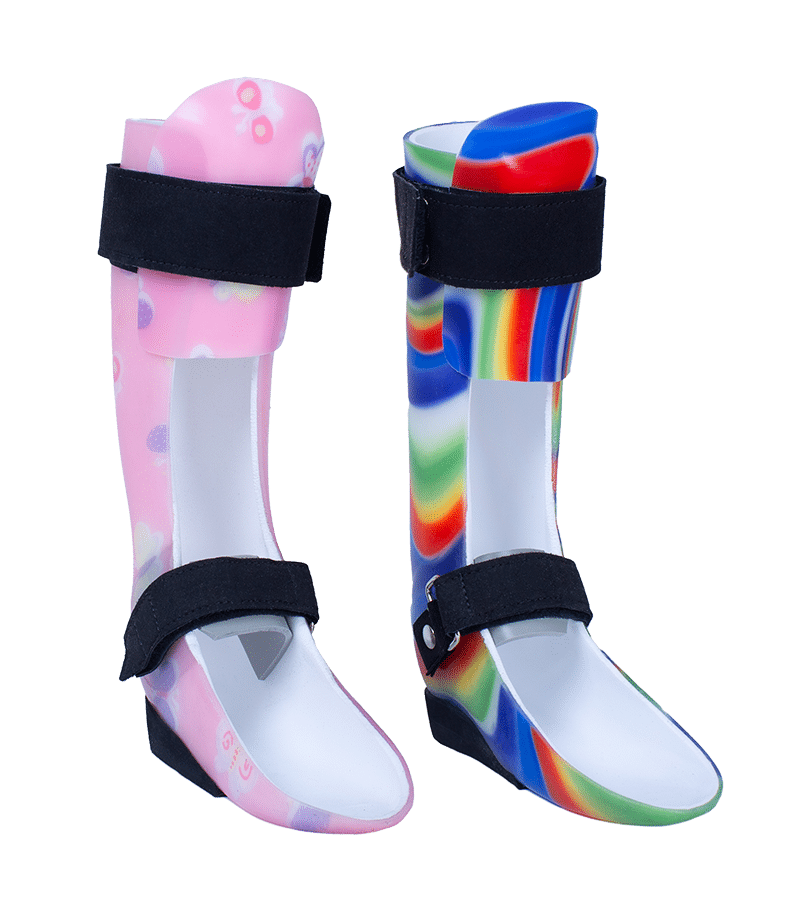
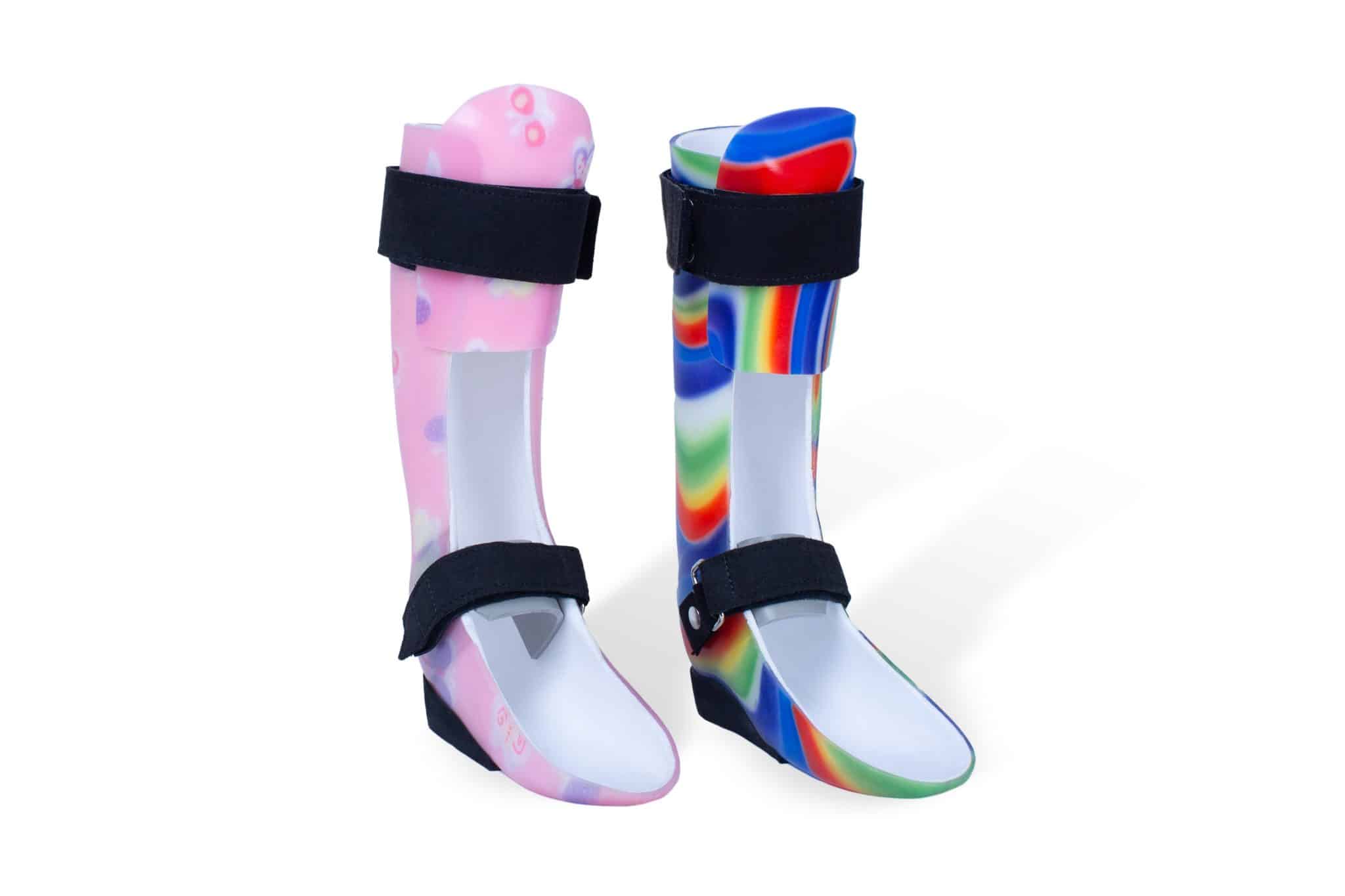
An Ankle Foot Orthosis (AFO) is a brace designed to support and control the position and movement of the ankle and foot. AFOs can also immobilise the ankle and lower leg to aid in rehabilitation and correct specific issues. They are the most well-known and frequently prescribed orthotic devices due to their versatility and effectiveness.
What sets our AFOs apart is the level of precision and customisation we bring to their design and tuning. Each orthosis we make is 100% bespoke. Depending on the patient’s needs, we can create AFOs with a fixed ankle for greater control of gait mechanics or incorporate a hinged design to allow controlled movement in a single plane.
A critical part of our process is the fine-tuning of each bespoke orthotic to ensure optimal alignment and comfort. We use state-of-the-art gait analysis technology as standard to help us assess, prescribe and fine-tune all our orthotics.
By prioritising this approach, we deliver AFOs that not only meet, but exceed, expectations for functionality and comfort.

Custom footwear is tailored to accommodate unique foot shapes and alignments. They offer better comfort, support, durability and are often used alongside other lower-limb orthotic devices like AFOs or SMOs.
At LOC, we’re committed to delivering high-quality footwear that meets both your clinical and aesthetic needs. We can provide a complete range of footwear, from simple, extra volume high street style shoes, to complex, bespoke orthopaedic and diabetic footwear.
Whether you need extra-depth shoes, modular modifications, or fully bespoke orthotics, our team will guide you through the process to find the best solution for you.
View some of the most asked questions about Hypermobility here, or search below for a question you might have.
Don’t forget you can always send us a message or give us a call on 020 8974 9989 if you’d prefer.
If you have hypermobility, your joints move beyond the typical range, which can lead to instability and increase the risk of injury in everyday activities like walking. To help prevent injuries:
1. Wear supportive footwear: Shoes that provide adequate support can complement the benefits of orthotics.
2. Engage in appropriate exercises: Strengthening and conditioning exercises tailored to your needs can enhance joint stability.
3. Use bespoke orthotics: Custom-made orthotics can stabilise your joints, improve alignment, and reduce strain on muscles and ligaments.
Our clinicians can assess your gait and provide personalised orthotic solutions to support your mobility and reduce discomfort. Learn more about how we can help on our Hypermobility page.
We’re happy to answer any questions you might have, with no commitment to proceed with treatment.