



Speak to our team about your options, with no obligation to begin treatment.
If you can’t find a suitable appointment, please contact us and our admin team will be happy to help.
We use cookies where necessary to allow us to understand how people interact with our website and content, so that we can continue to improve our service.
We only ever receive anonymous information, and cannot track you across other websites.
View our privacy policyOrthotics play a vital role in managing the symptoms of cerebral palsy, particularly as a child grows. Improving their mobility, gait pattern, stability and supporting their long-term musculoskeletal health.
Every orthosis we create is bespoke, designed around your child’s goals, environment, and their evolving needs.

We specialise in prescribing and treating cerebral palsy patients with bespoke, custom-made orthotics. We believe that orthotics are not a product that is handed over to a patient to use but a powerful tool to help in their treatment and rehabilitation.
We take a clinical, individualised approach grounded in internationally recognised best practices, advanced technology, and our vast knowledge and expertise in paediatric orthotic care.
Bespoke orthotics for cerebral palsy can:
Each orthotic we create is uniquely tailored to the specific needs of the patient and designed to support their individual treatment goals.
What makes our approach at LOC different is how we prescribe orthotics. Each device we produce is the result of a detailed clinical assessment, history taking, and a full gait analysis, including 3D motion capture in one of our state-of-the-art gait labs.
There are more than 50 clinical decisions that must be made when prescribing an Ankle Foot Orthosis (AFO) for a child with cerebral palsy. This is why our orthotic care is always based on thorough examination, gait analysis, clear goal-setting, and internationally recognised guidelines, and we also contribute to the research in this area, including Catherine’s published paper on best practice reporting for AFO interventions in children with cerebral palsy.
The majority of our CP patients are children and our entire orthotic treatment process is designed with that in mind. Every step is focused on supporting not just your child’s mobility, but their overall development, independence and long-term outcomes.
We begin by listening. Your first appointment includes a full clinical history and a conversation about your goals as a family; what you’d like to see your child doing more easily, more comfortably, or more independently.
We use the internationally recognised ICF framework to guide our goal-setting. This means we look beyond just physical symptoms to include:
Next comes a detailed physical assessment, looking at joint alignment, muscle tone, while measuring leg length and existing movement patterns. Where appropriate, we also use 3D gait analysis in our in-house gait labs, assessing your child’s walking both barefoot and in any current orthotics.
This advanced technology allows us to spot specific areas of walking inefficiency, instability or asymmetry, and helps us plan exactly how an orthosis can help.
Instead of traditional plaster casting, we use high-resolution 3D scanning to capture the precise shape of your child’s legs or feet. It’s quicker, non-invasive, and much more comfortable for patients.
This data allows us to create orthoses with exceptional fit and accuracy.
Our state-of-the-art gait labs provide precise 3D movement data and real-time feedback. This helps clinicians create more accurate and personalised orthotics.
Understanding where the force is positioned in relation to the leg is essential for accurate fine-tuning of the lower limb orthotics that we prescribe. It allows us to compare walking patterns before and after treatment so we can measure progress over time.
With this technology, we can track progress, solve problems, and make changes quickly. It leads to better-fitting orthotics and better outcomes for children. Parents can see clear improvements, giving them confidence in their child’s care.

From here, we design a fully customised orthosis to suit your child’s exact needs and goals. Every element is tailored:
The fitting appointment is where everything comes together. We make sure your child is physically comfortable and at ease, and that you as parents know exactly how to use and care for the orthosis.
We also carry out real-time gait testing during the fitting to fine-tune alignment and ensure the orthosis is delivering the support and movement pattern we want to achieve.
As children grow, their needs change. That’s why regular follow-ups are built into our treatment plan. We monitor wear, fit and function, and adapt as needed.
Even small changes to leg length or muscle tone can shift the effectiveness of an orthosis, so our reviews focus on:
Having treated many patients over the years, we have developed a reputation in the Selective Dorsal Rhizotomy community for helping to rehabilitate patients who have undergone this surgery, with bespoke orthotics.
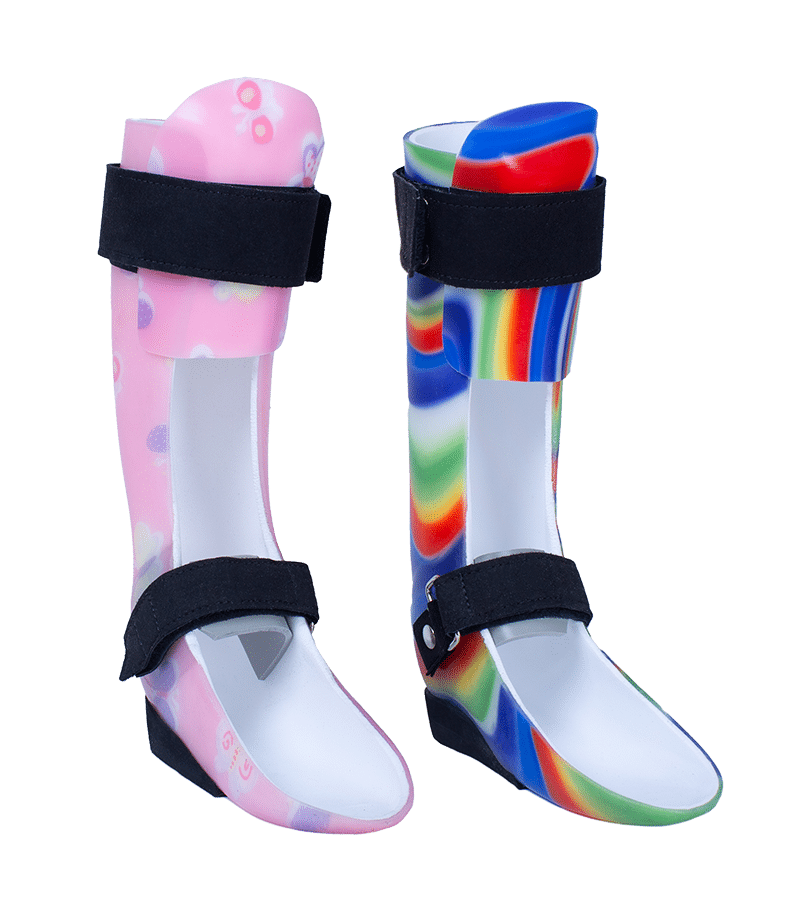
Every orthosis we make is completely designed to your needs and lifestyle. Everything from the materials, lining and function to the way it fits in your footwear. We design AFOs for every purpose; from rehabilitation post-surgery to horse riding and snowboarding.
We use our 3D scanning app to take an impression of patients’ feet and legs (no more plaster casting). Making it quicker, easier, more accurate and more comfortable for patients than traditional plaster casting.
We offer advanced AFO technologies like the Neuro Swing Ankle Joint and Neuro HiSwing, which provide adjustable resistance, range of motion, and alignment to support natural gait and muscle activation. These systems adapt as patients progress, improving mobility on uneven terrain and optimising rehabilitation outcomes.
State-of-the-art gait laboratories capture and analyse the movement of the body during walking. This gives us a comprehensive evaluation of your gait pattern and mobility needs, allowing us to make, assess and fine-tune our AFOs to the highest standard.
Wearing the right footwear is essential for orthotics to work at their best. That’s why we always take your existing footwear into account and advise on the best shoes.
Orthotic treatment for adults with cerebral palsy is often focused on managing symptoms such as pain, discomfort and fatigue, while supporting mobility, independence and quality of life.
As patients transition into adulthood, growth has stopped, which reduces the risk of joint contractures and means orthotic devices do not need to be replaced as frequently. However, adults with cerebral palsy may face new challenges such as joint degeneration, muscle fatigue, or uneven gait patterns.


An SMO supports the ankle and foot just above the ankle bone or malleoli. Unlike more rigid braces, SMOs are made with lightweight, flexible materials to allow for a more natural range of movement while still offering support.
Typically, they are shorter than ankle foot orthoses (AFOs) and do not come as far up the calf. Unlike more rigid braces, SMOs are made with lightweight, flexible materials to allow for a more natural range of movement while offering support.

A Dynamic Ankle Foot Orthosis (DAFO) is a custom-made brace that supports the ankle and foot. Unlike rigid orthotics, a DAFO is thin and flexible enough to help with balance and stability while allowing the foot to move more freely.
It wraps around the patient’s entire foot to improve stability and gives excellent proprioceptive feedback from the ground using its dynamic footplate, so the brain is more aware of the position and movement of the foot.
This can be particularly beneficial for those with neurological disorders like cerebral palsy and spina bifida.

A Reciprocating Gait Orthosis (RGO) is designed to assist individuals in walking by supporting a natural, reciprocal gait pattern. This device typically features jointed metal frames, straps, and components that attach to the user’s legs and torso. Its main function is to mimic the natural walking motion by coordinating the movement of the legs. So when one leg moves forward, the other moves backward, allowing for a smoother, more efficient walking pattern.
RGOs are equipped with hinges at the hip and knee joints, enabling dynamic movement and coordination. A locking mechanism provides added stability during standing or resting phases. The user initiates movement through weight shifting or by using assistive devices, with the RGO converting this motion into a coordinated walking pattern.
We specialise in the design and manufacture of bespoke RGOs particularly for spinal injury patients. Enhancing mobility and promoting greater independence in walking.

A Knee Ankle Foot Orthosis (KAFO) is a custom-made brace that supports the entire leg, across the knee, ankle, and foot. KAFOs provide full leg support from the thigh to the foot.
They help patients with cerebral palsy improve stability, alignment, and mobility by supporting weakened or spastic muscles and preventing joint deformities. KAFOs are also prescribed for people with muscle-weakening conditions or paralysis, such as for post-polio syndrome, muscular dystrophy, multiple sclerosis, or spinal cord injury.

The Agilik™ smart orthosis from Bionic Power is a state-of-the-art lightweight device designed to enhance walking by working with the user’s natural movement. Specifically, the Agilik™ can effectively address crouch gait, a tiring and exhausting walking pattern typical of cerebral palsy patients.
Unlike exoskeletons, which support a patient’s body and move for them, the Agilik™ provides dynamic assistance and resistance during walking. This helps users stand straighter, walk more easily, walk for longer and build strength.
The London Orthotic Consultancy has been appointed the paediatric specialist centre for the Agilik™ smart orthosis in the UK.

Lycra suits offer dynamic compression, helping cerebral palsy patients with motor control, posture, and sensory feedback. These suits are designed to improve coordination and reduce involuntary movements.

Orthotic wrist splints are specially designed to help manage and improve wrist and hand contractures. These splints gently stretch tight muscles and tendons, supporting the wrist in a neutral or functional position to reduce stiffness and prevent further deformities.

Custom footwear is tailored to accommodate unique foot shapes and alignments. For cerebral palsy patients, they offer better comfort, support, and durability, often used alongside orthotic devices like AFOs or SMOs.
We’re committed to always being as transparent as possible with our treatment costs. If you have any questions, please feel free to ask.
* Prices may vary depending on the complexity of the orthosis being fitted. We will always confirm the price with you at the initial consultation or in the subsequent quote for the orthotic treatment recommended beforehand.
If there is a specific orthotic product or device that you are interested in which is not listed, please contact our clinical team for more information.
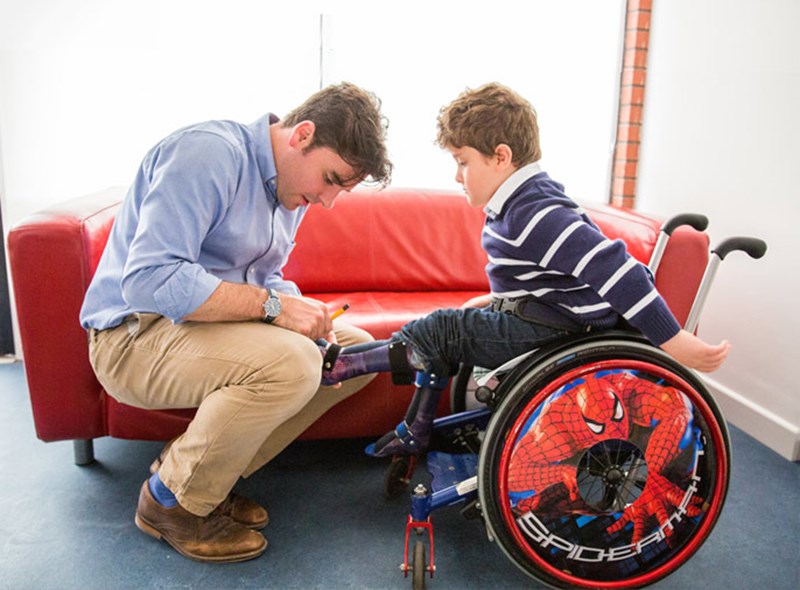
We believe in the power of bespoke orthotics to change lives. That’s why we’re committed to providing the best possible treatments for our patients.


Speak to our team about your options, with no obligation to begin treatment.
If you can’t find a suitable appointment, please contact us and our admin team will be happy to help.