We’re happy to answer any questions you might have, with no commitment to proceed with treatment.
The Ponseti method is widely seen as the best treatment for club foot in babies.
This involves stretching the foot gradually into a better position before using a plaster cast to keep it there for a week. These steps are repeated over 6 to 8 weeks and can get the foot back into a more typical position. This process is usually started within a couple of weeks of birth.
After that, most babies will need a small surgical procedure (tenotomy) to cut their Achilles tendon before the next phase of treatment.
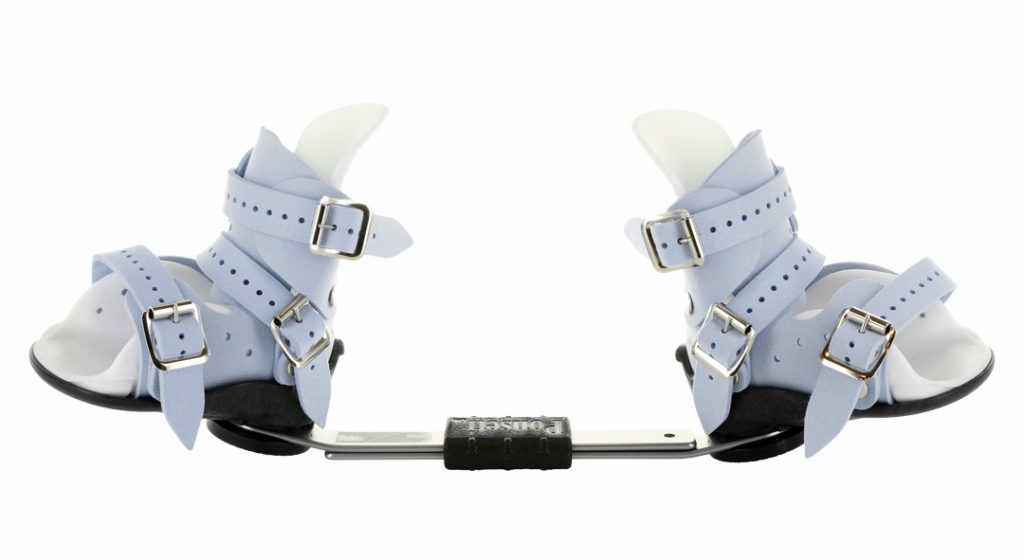
After this, babies need to wear special boots connected by a bar to stop their club foot from coming back.
A baby will need to wear this orthosis full-time for the first 3 months, to keep the foot in the right position. Then at night until the child is four or five years old. This treatment is proven to work well and can give great results.
But, parents can find it challenging and report some downsides with the boots and bar:
Not wearing the boots and bar to the recommended schedule can cause a baby’s club foot to return.
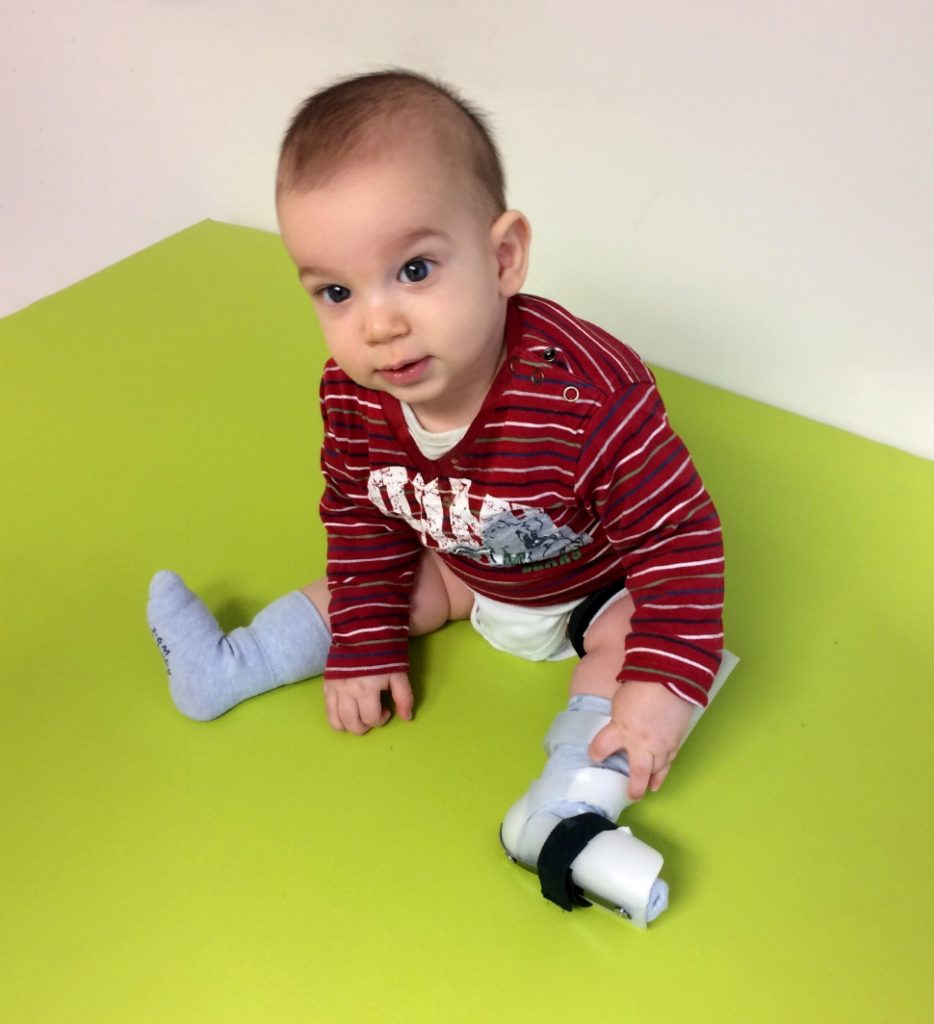
Also known as the Dynamic Torsional KAFO or DTKAFO, is a flexible brace that is only fitted to the affected leg. Unlike with the boots and bar where both feet are attached. It allows for better movement, making normal activities such as crawling, rolling, standing, and even walking, easier.
After a short time, babies typically don’t even notice the brace, making it more comfortable and easier for parents to manage.
This treatment is very effective and takes about a third of the time compared to other methods. Usually, only two braces are needed over the two years of treatment.
Adults with club foot who were not treated in childhood or whose treatment was unsuccessful, can experience pain and poor mobility later in life. Many of these issues can be treated effectively with orthoses.
These treatments include:
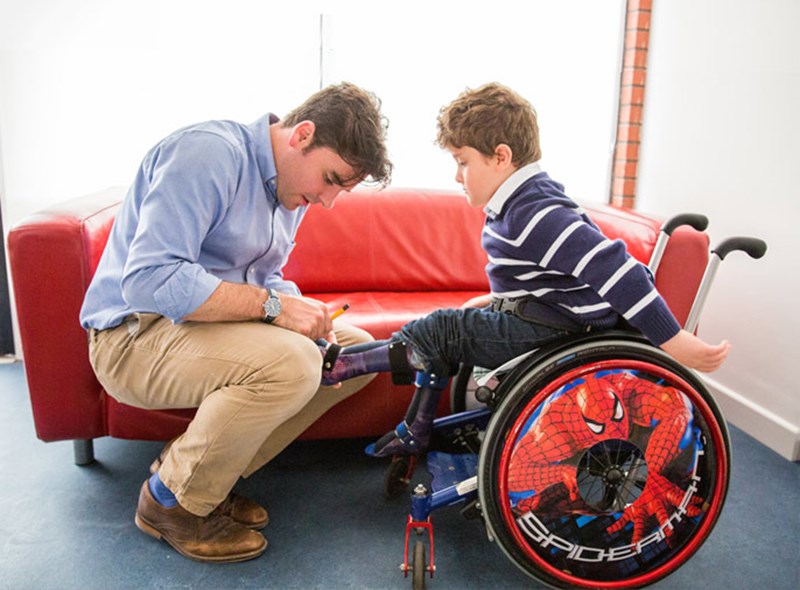
Dependent on what treatments you’ve had in the past, our clinicians will review your current symptoms and discuss what goals you want to achieve. This will help your clinician determine the right orthotics for you.
The Cunningham Brace was developed by Jerald Cunningham, prosthetist and orthotist based in Maine, United States.
LOC has been given the exclusive rights to prescribe and fit the Cunningham Brace in the UK and Europe.
View some of the most asked questions about Club foot treatment here, or search below for a question you might have.
Don’t forget you can always send us a message or give us a call on 020 8974 9989 if you’d prefer.
Clubfoot can lead to walking difficulties due to abnormal foot positioning. Challenges may include:
– Limited range of motion: The foot may have restricted movement, affecting gait.
– Pain or discomfort: Improper alignment can cause strain during walking.
– Balance issues: The altered foot structure may impact stability.
Treatment options focus on correcting foot alignment and improving function:
– Bespoke orthotic devices: Custom-made braces can support proper foot positioning.
– Specialised footwear: Shoes designed to accommodate and support the foot’s shape.
– Physical therapy: Exercises to strengthen muscles and enhance mobility.
Our clinic provides comprehensive care for individuals with clubfoot. Learn more about our approach on our club foot treatment page.
If untreated, club foot can lead to significant mobility issues, pain, and difficulty walking. Early treatment helps to avoid these complications.
While the risk of recurrence exists, following the recommended treatment plan, including bracing, significantly reduces this risk. Regular follow-ups are essential to monitor for any signs of recurrence.
Yes, many adults living with untreated club foot can benefit from orthotic treatments. Visit our page on adult club foot treatment for more information.
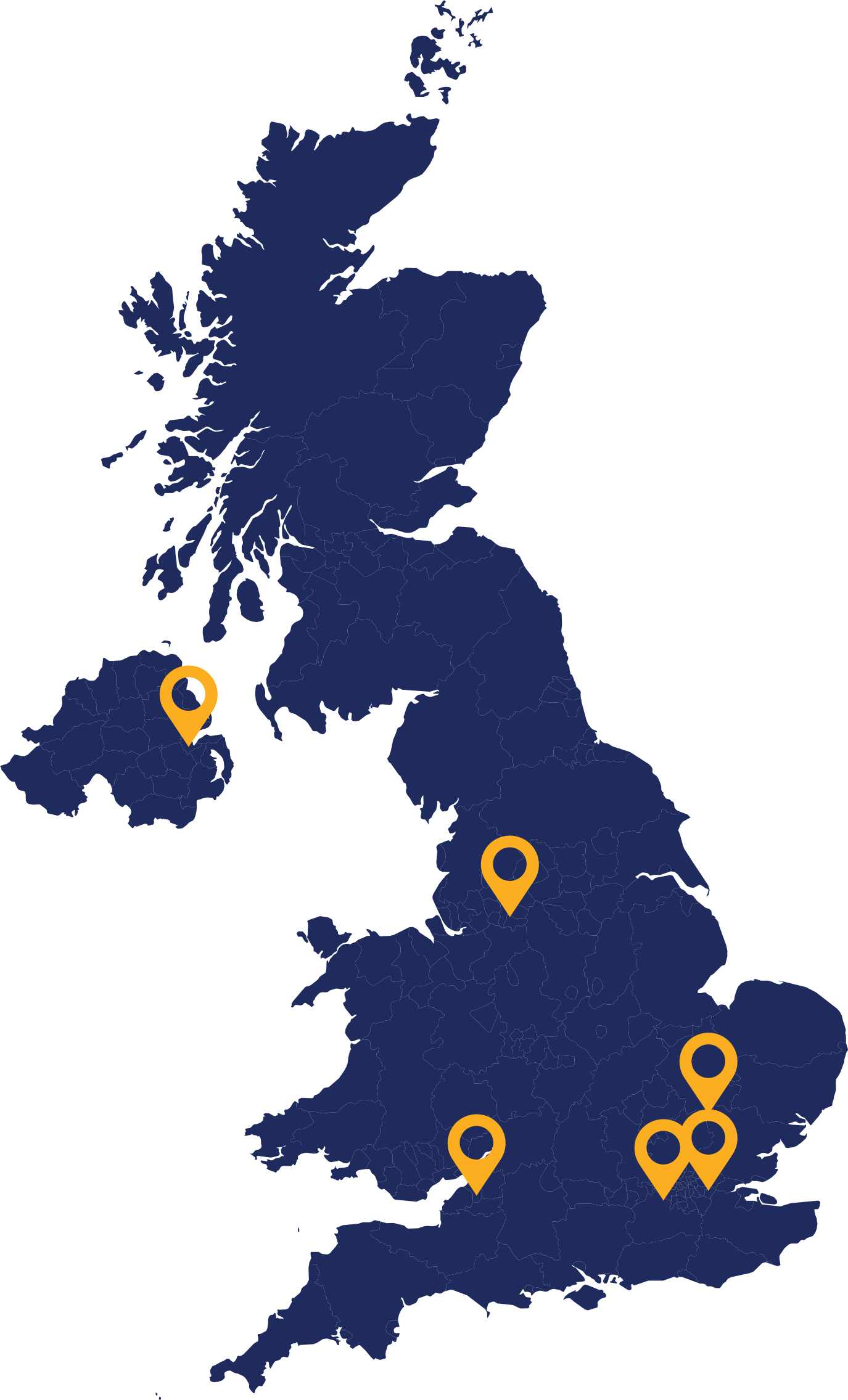
We offer fittings at our clinics in Kingston-upon-Thames and Bristol, with follow-ups available in Manchester. Initial fittings are conducted in person, but many follow-up appointments can be virtual.
Costs vary depending on whether one or both legs require bracing. Please refer to our pricing page for detailed information.
We’re committed to always being as transparent as possible with our treatment costs. If you have any questions, please feel free to ask.
*Please note that as your child grows, a replacement brace may be needed. The need for a new brace depends on when treatment starts and how quickly your child grows.
We believe in the power of bespoke orthotics to change lives. That’s why we’re committed to providing the best possible treatments for our patients.
We’re happy to answer any questions you might have, with no commitment to proceed with treatment.