
We’re happy to answer any questions you might have, with no commitment to proceed with treatment.
If your drop foot is from an injury or temporary nerve damage, you may require temporary solutions while it heals on its own.
If it’s due to permanent nerve damage or a progressive condition, it’s usually lifelong, but custom orthotics can help manage it effectively and improve day-to-day life.
To treat drop foot affectively, we carry out a detailed biomechanical and gait assessment. This means looking at:
There are many different types of orthotic devices that can be used to treat drop foot.
Some are very simple and purely deal with the drop foot. These can include elasticated supports and off-the-shelf fabric ankle foot orthoses like the Foot Up device.
But although these may appear to resolve short-term risk factors like tripping, they do not prevent the longer-term risks of orthopaedic damage.
More advanced orthotic solutions can reduce trips and falls while improving your gait for the long-term. The basic aim is to control the foot drop during the swing phase part of the gait cycle and ensure that any initial contact with the ground occurs with heel contact.
Bespoke options are also designed to control the medial/lateral stability of the ankle and ensure that the lower leg is repositioned during the stance phase to allow as normal a gait pattern as possible.
We’ve successfully treated many drop foot patients over the years, with a range of bespoke orthotics, insoles and footwear.
The best way to find out which orthosis is right for you is to book an appointment with one of our experienced clinicians. We can carry out a detailed assessment in our gait lab and work with you to achieve your personalised treatment goals.
Below, you’ll find some of the more common types of orthotics we prescribe for drop foot.
AFOs are the most commonly used orthotic devices for managing drop foot and improving mobility.
An AFO can help control the range of motion in your foot and ankle and help to stabilise its position. They are typically made from a semi-rigid plastic but can be made from a range of materials. We’ve even designed AFOs to fit inside snowboarding and horseriding boots.
They can help foot drop patients by maintaining proper ankle alignment and dorsiflexion (the backward bending motion of the foot). This can make it easier and more comfortable for you to walk, improve the visible appearance of your gait, and increase your confidence when you’re out and about.
There’s nothing off-the-shelf about our orthotics. Every AFO we design is entirely bespoke and designed to your specific biomechanical needs.
The Neuro Swing system is an adjustable, dynamic ankle joint system designed to improve gait, stability, and rehabilitation for drop foot patients. We commonly integrate them into carbon fibre Ankle Foot Orthoses (AFOs).
Unlike traditional fixed AFOs, this system allows some natural movement if the patient retains some muscle activity. The system allows tweaks and adjustments for different ankle alignments, allowing us to optimise for comfort and individualise adjustments based on your specific needs.
All this allows a more natural gait pattern, protecting bones and joints from abnormal stress. Not only does this benefit your ability to walk in the short-term, it also protects the bones and joints and encourage your muscles to work correctly.
Carbon fibre braces, such as carbon fibre Ankle-Foot Orthoses (AFOs), offer several advantages over traditional plastic AFOs, making them a superior choice for many drop foot patients.
Carbon fibre braces are lightweight, strong, and dynamic, improving mobility and comfort.
Carbon fibre is significantly lighter than plastic, which can reduce fatigue during walking. They’re also slimmer than traditional plastic AFOs, making them easier to fit inside normal shoes.
Plus, carbon fibre provides energy return, helping with push-off during walking, improving efficiency and reducing effort. This can help patients walk faster and with less fatigue, which is especially beneficial for active users.
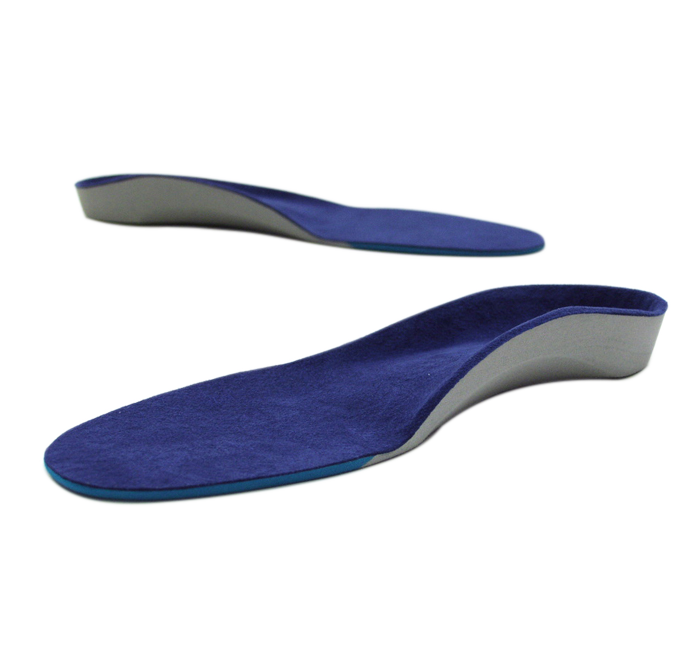
Some people with mild cases of drop foot might benefit from custom-made foot orthotics, or shoe inserts.
These can provide cushioning and support, helping to address any biomechanical issues that contribute to the condition.
View some of the most asked questions about Drop foot treatment here, or search below for a question you might have.
Don’t forget you can always send us a message or give us a call on 020 8974 9989 if you’d prefer.
Lower limb splints, also known as orthoses, are devices designed to support and stabilise the legs. They can:
Our team specialises in creating custom lower limb orthotics tailored to individual needs. For more information on our services, please visit our bespoke page.
We’re happy to answer any questions you might have, with no commitment to proceed with treatment.