
Have a question about your condition or treatment options? We’re here to help.
Simply complete our contact form, and a member of our team will get back to you to answer your questions and help you understand the next steps.
We use cookies where necessary to allow us to understand how people interact with our website and content, so that we can continue to improve our service.
We only ever receive anonymous information, and cannot track you across other websites.
View our privacy policyOrthotics play an important role in helping children transition to improved mobility and function after SDR surgery. By providing stability, promoting alignment and enhancing movement.
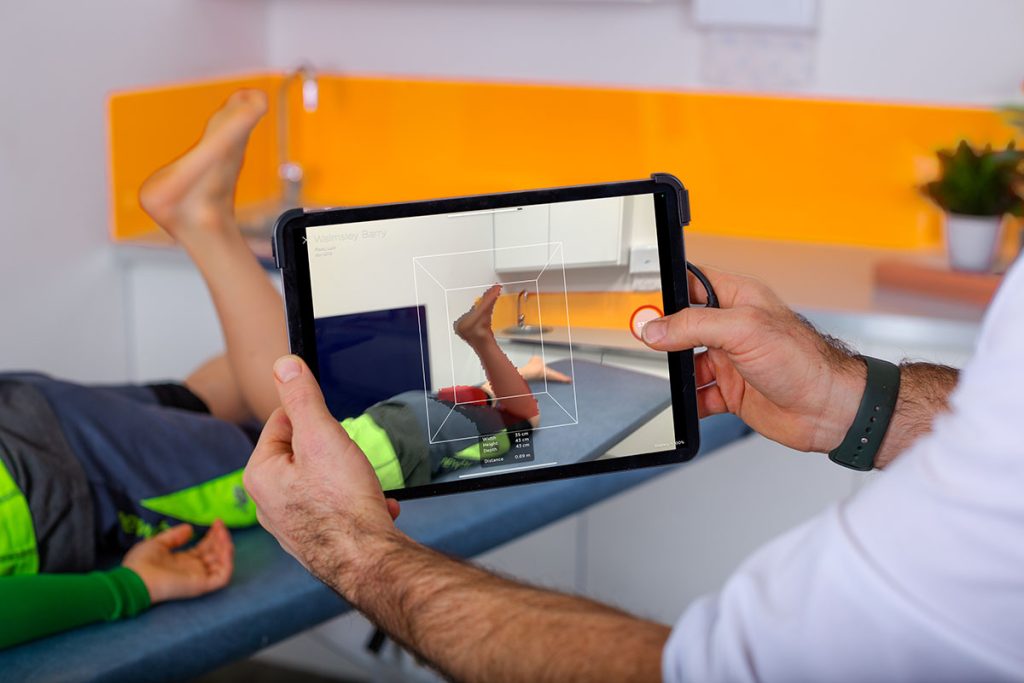
Selective Dorsal Rhizotomy (SDR) surgery is a life-changing procedure for children with spastic cerebral palsy, as it reduces muscle stiffness and improves mobility.
While SDR addresses the root cause of spasticity by selectively cutting sensory nerve fibres, a comprehensive rehabilitation plan is essential for maximising the benefits of the surgery. One critical component of this plan is the use of orthotics.
Post-SDR surgery, children can experience significant changes in muscle tone and movement patterns. While the reduction in spasticity allows for more fluid and controlled movements, it also requires the muscles and joints to relearn how to function in this new state.
This is where bespoke orthotics come in. When prescribed alongside gait lab analysis, they can:
The type of orthotic prescribed depends on the child’s specific needs, which are assessed by the rehabilitation team. Common prescriptions include:
For children with milder needs, custom foot orthotics can provide subtle corrections and support.
Orthotics are just one part of the broader rehabilitation plan following SDR. Physical therapy plays a central role, focusing on strengthening weakened muscles, improving flexibility, and developing motor skills. Orthotics work hand-in-hand with therapy by:
Every child’s needs after SDR are unique, and orthotics must be customised to match their specific requirements. Regular follow-ups with your orthotist and rehabilitation team ensure that the devices are adjusted as the child’s strength, range of motion, and functional abilities improve.
Orthotics play a vital role in helping children transition to improved mobility and function after SDR surgery. Providing stability, promoting alignment, and enhancing movement, they support the child’s journey toward achieving greater independence and quality of life.
Parents and caregivers should work closely with their child’s rehabilitation team to ensure that orthotics are effectively integrated into the recovery process.
At LOC, we specialise in designing clinically-led, bespoke orthotics that make a meaningful difference to patients with cerebral palsy. Our orthotics don’t just offer support, they’re precision tools used to improve mobility, stability and gait, based on in-depth assessment and advanced biomechanical analysis.
Every orthosis we create is the result of careful planning, goal-setting and fine-tuning, tailored to support each child’s development and unique functional needs. Giving children the best possible foundation for movement, independence and participation.

Have a question about your condition or treatment options? We’re here to help.
Simply complete our contact form, and a member of our team will get back to you to answer your questions and help you understand the next steps.
