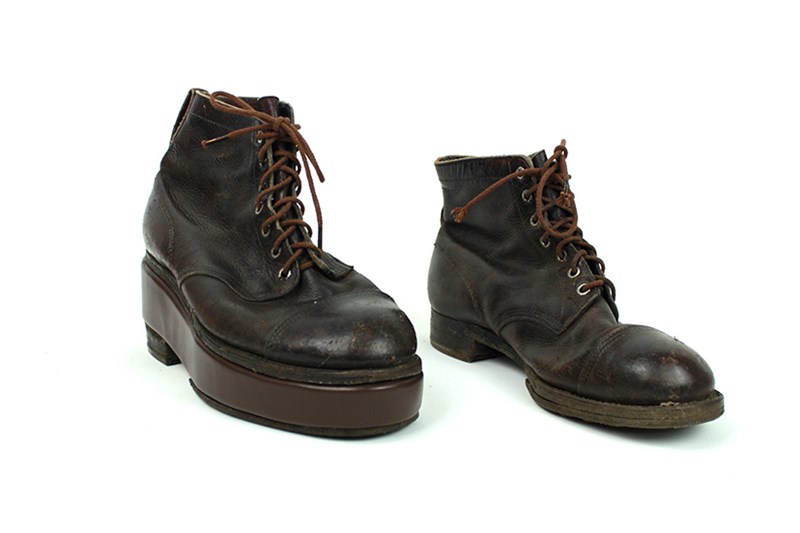
The Christmas edition marked the beginning of its eighth season on BBC One, with the rest of the series to follow in 2019. Writer for the show, Heidi Thomas, is a well-known stickler for period accuracy and the show has not shied away from using prosthetics in the past. For each birthing scene, both a real and prosthetic baby made from medical grade silicon (the same kind used in artificial limbs) are used.
What is club foot and how is it treated?
Club foot, sometimes referred to as talipes is a congenital deformity that can affect either one or both feet. A baby with club foot will have one or both feet pointing down and inwards and, without treatment, a person suffering club foot will appear to walk on the sides of their feet or ankles. When proper treatment of club foot with bracing has been started shortly after birth, good clinical correction can be obtained in most cases.
Club foot treatment has a long, controversial and varied history. It wasn’t until half a century ago that Spanish physician Dr Ignacio V Ponseti suggested serial plaster casting was favourable for treating club foot with better long-term results and less short-term pain. Plaster casting every 6-8 weeks allows the tendons and muscles to be aligned correctly and makes the most of babies’ flexible ligaments – this is known as the Ponseti method, the gold standard in club foot treatment in the UK and most of the world.
The Ponseti technique involves the baby’s foot being gently manipulated from its incorrect inward-facing position to a more correct outward position, then being put in a cast on a weekly basis. Casting continues for around five to eight weeks and after this stage, a tenotomy (small surgical incision) of the achilles tendon is performed under local anaesthetic to release the foot.
Traditionally, many babies will then go on to have a traditional ‘boots and bar’ brace, comprised of special shoes attached to each other by a metal bar the same width as the baby’s shoulders. The brace keeps the club foot fixed in the corrective position achieved during the casting phase.
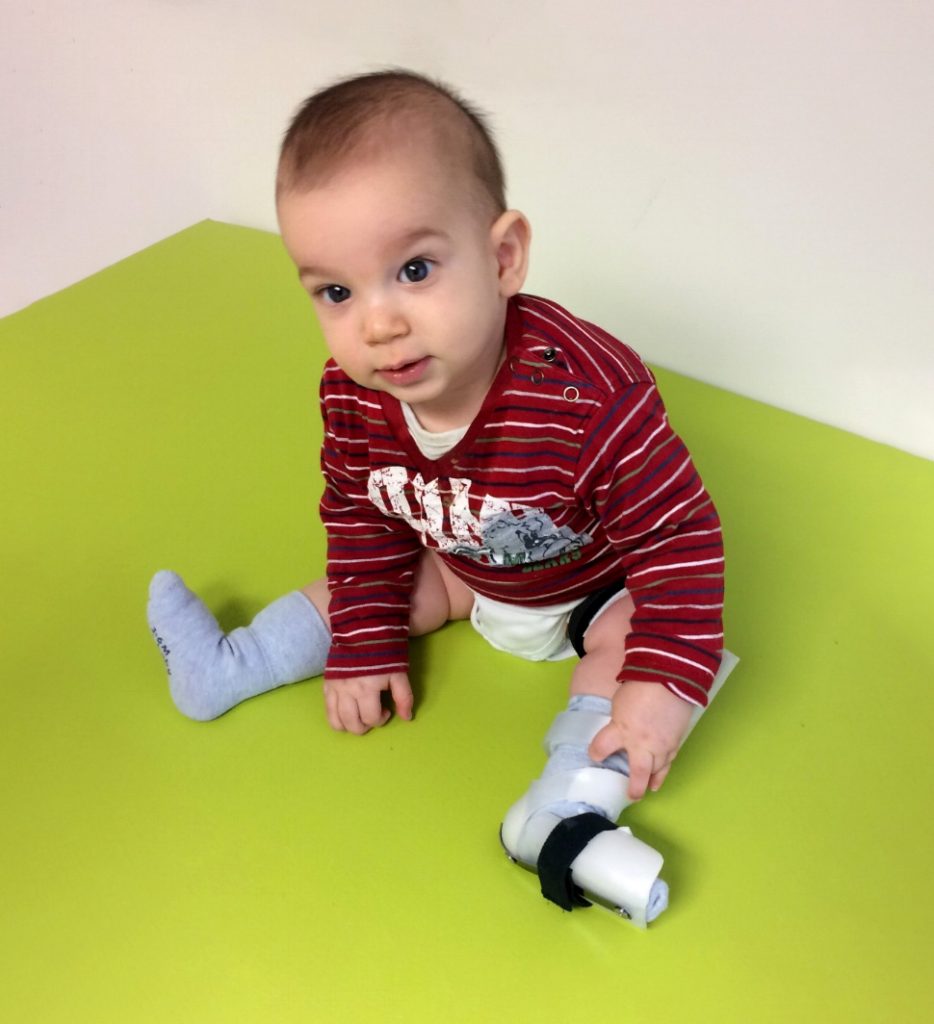
At LOC, we treat club foot deformity with the Cunningham brace (also known as the Dynamic Torsional KAFO or DTKAFO) which is a flexible brace developed by a prosthetist and orthotist Jerald Cunningham in Maine, USA. The Cunningham brace was developed to offer an alternative to the boots and bar method, which can be difficult for parents to put on and keep on with wriggling babies. Other complaints are that children can find it difficult to sleep in them.
Like the boots and bar brace, it keeps the feet in the same corrective position and gently stretches the muscles, but, unlike traditional braces, the Cunningham brace is only fixed to the affected foot, so accommodates for day to day activities like crawling. Increased comfort for the baby means it’s more likely for compliance rates to go up – i.e. parents don’t have to worry about their child’s discomfort and it means they are more likely to stick with treatment.
If you would like to know more about our club foot services, or indeed our bespoke orthotics manufacturing service, please do get in touch today by giving us a call on 020 89749989.