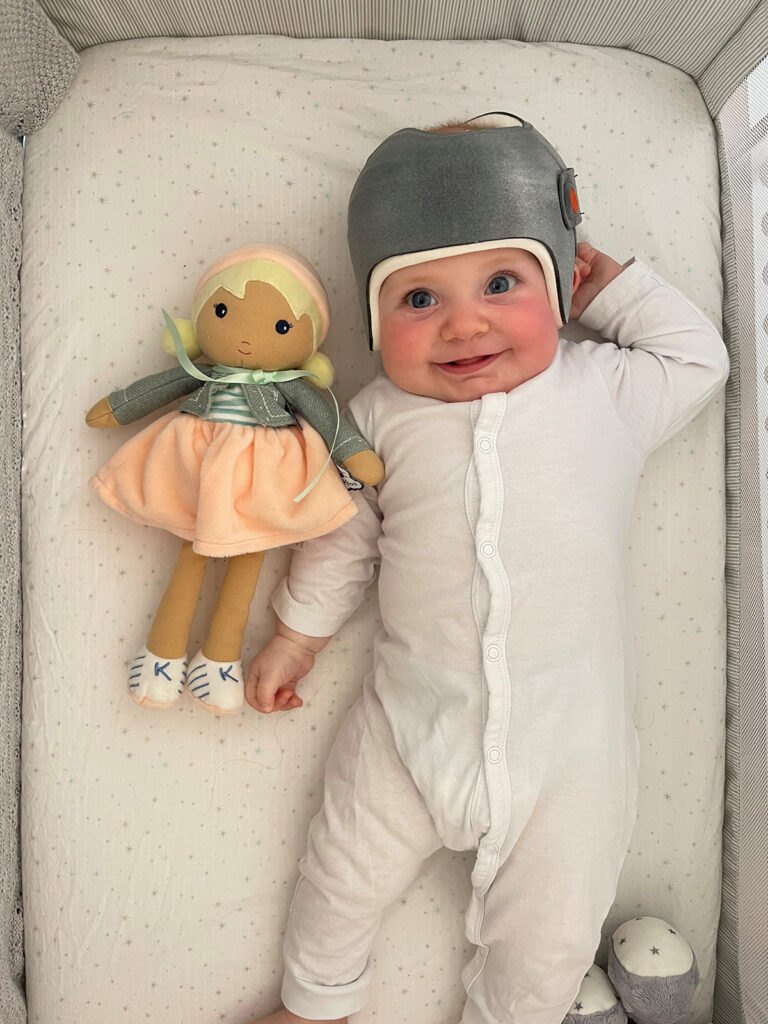
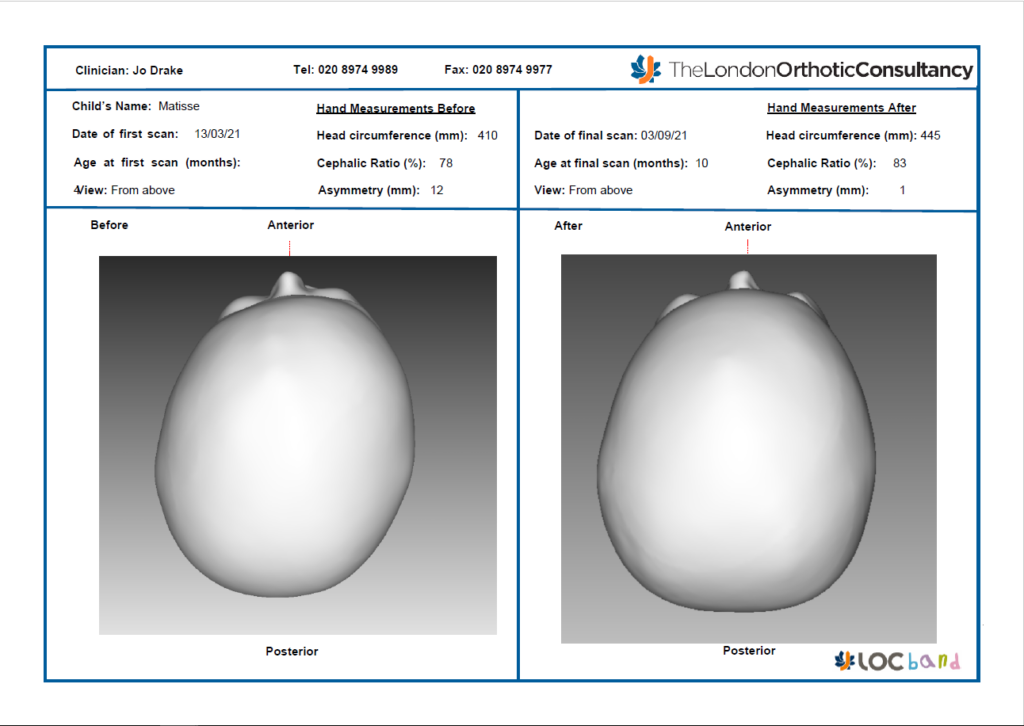
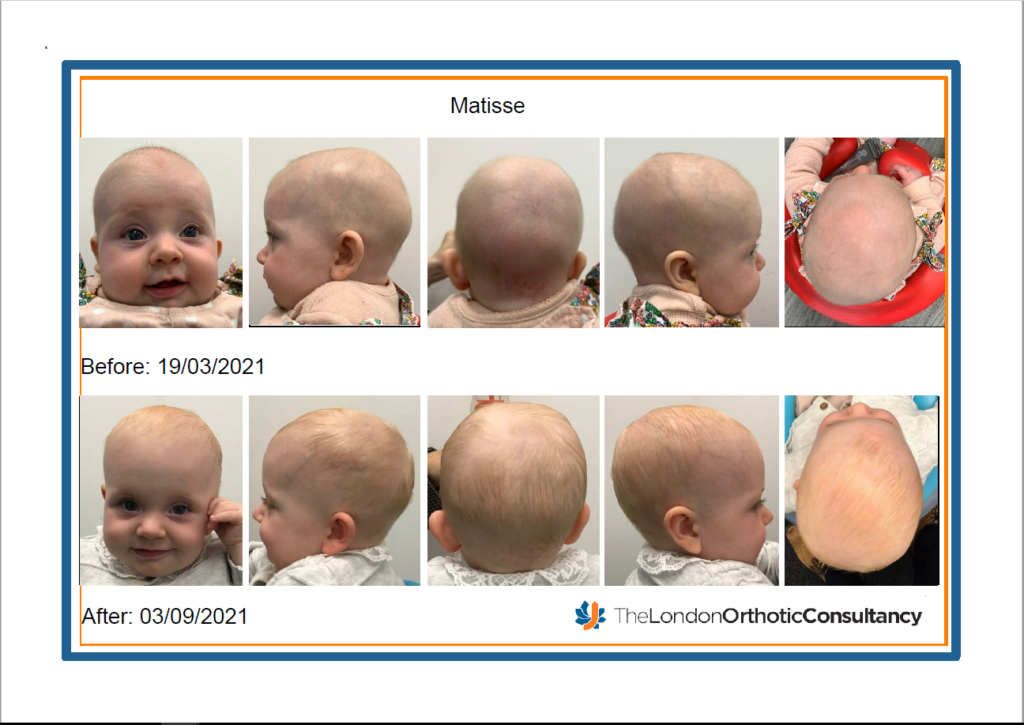
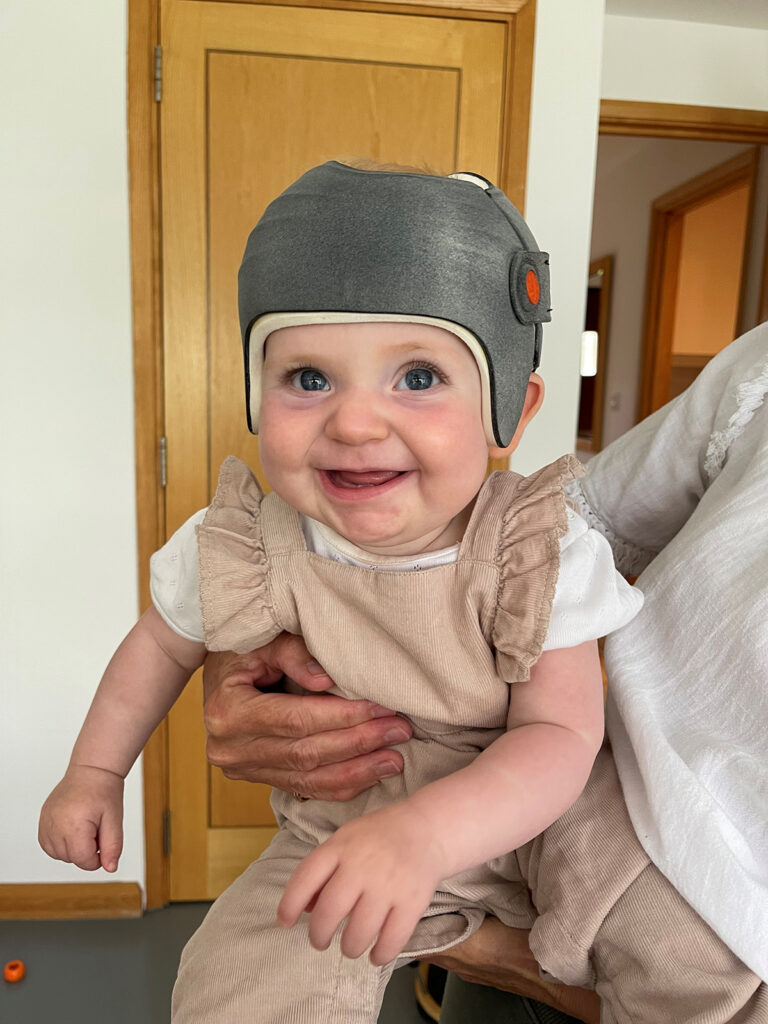
We first met little Matisse in April 2021, when she was four and a half months old. Mum, Louise, initially noticed that Matisse was developing a flat head during her infancy. “I recognised the signs because my son had a similar issue at the same age,” she tells us. “In his case, it resolved itself as his sleeping patterns changed. In Matisse’s case, though, by the time she was four months old the flatness was getting worse. We were especially concerned that it was starting to affect her facial features. Her forehead was staring to bulge on one side and her eye was also starting to be affected. We felt that, if we didn’t take steps to address it, the issue would simply get worse.”
In some cases, positional plagiocephaly can indeed resolve itself through repositioning and tummy time. However, in the case of many babies this does not happen and it is important to seek plagiocephaly treatment as early as possible before the plates of the skull harden.
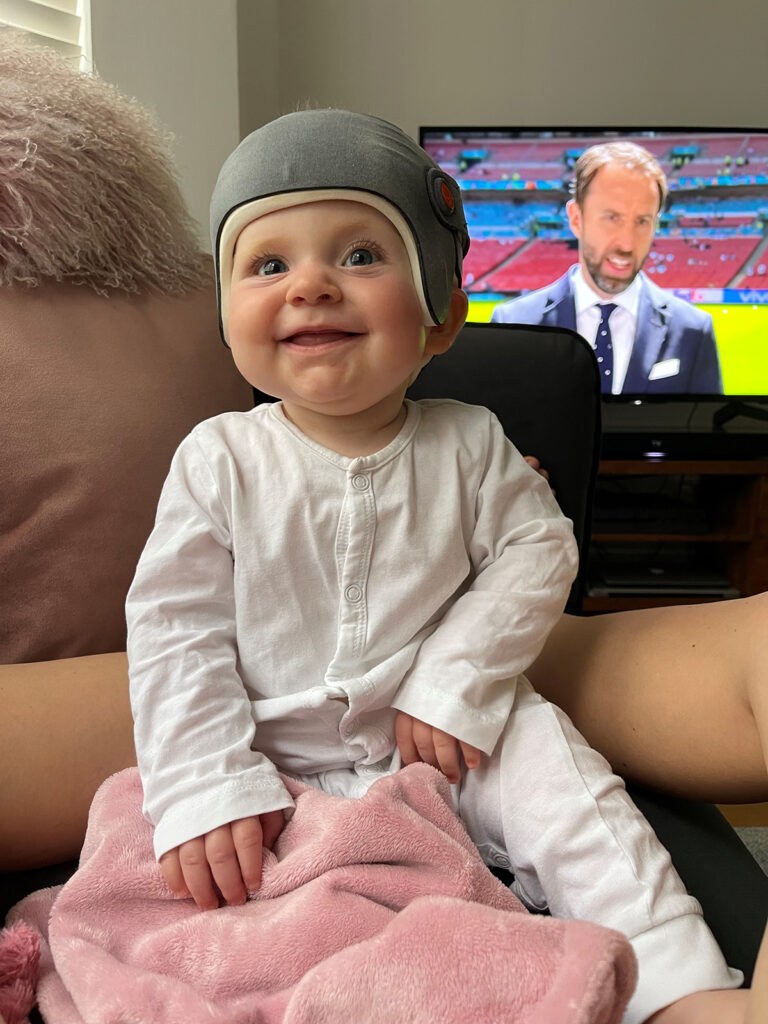
In Louise’s case, an unexpected coincidence led her to LOC. “I was chatting to a friend about the situation, and she suggested that perhaps craniosacral therapy might help. Sadly, I was disappointed with the experience. But, by chance, my mum took my son out whilst we were seeing the therapist. She bumped into a lady whose baby was wearing a LOCband helmet. On approaching her, it emerged that LOC had provided the helmet, and so my mum took the details. The very next day, I filled out the online photo diagnosis form. I was offered a video appointment with Saeed (Saeed Hamid, LOC Director and Senior Orthotist), who confirmed plagiocephaly. We got an appointment at the Kingston clinic just days later. It was really fast!”