
Have a question about your condition or treatment options? We’re here to help.
Simply complete our contact form, and a member of our team will get back to you to answer your questions and help you understand the next steps.
We use cookies where necessary to allow us to understand how people interact with our website and content, so that we can continue to improve our service.
We only ever receive anonymous information, and cannot track you across other websites.
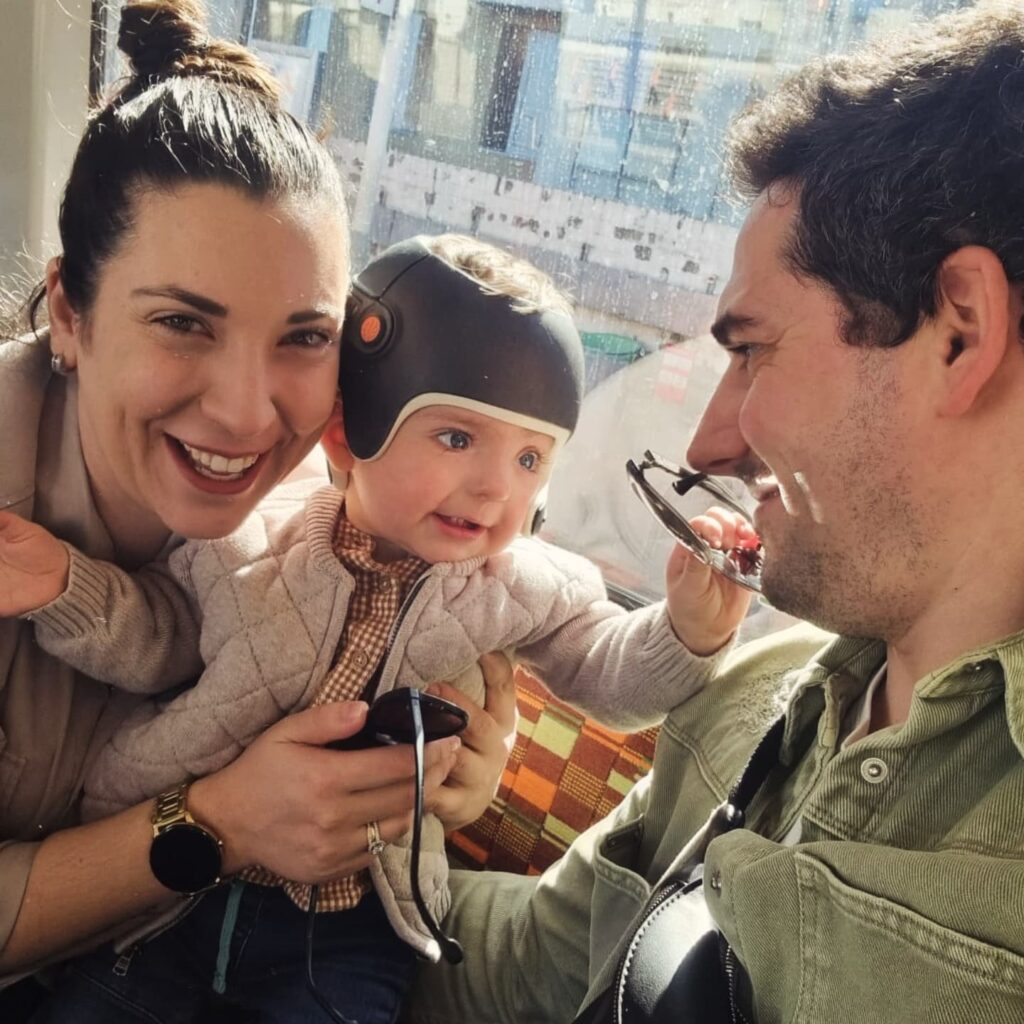
View our privacy policyGabriel was treated for craniosynostosis at just three months old. After surgery, he began helmet therapy with us to support his head shape. With ongoing support and regular reviews, his asymmetry reduced from 8mm to 1mm and he is now thriving.
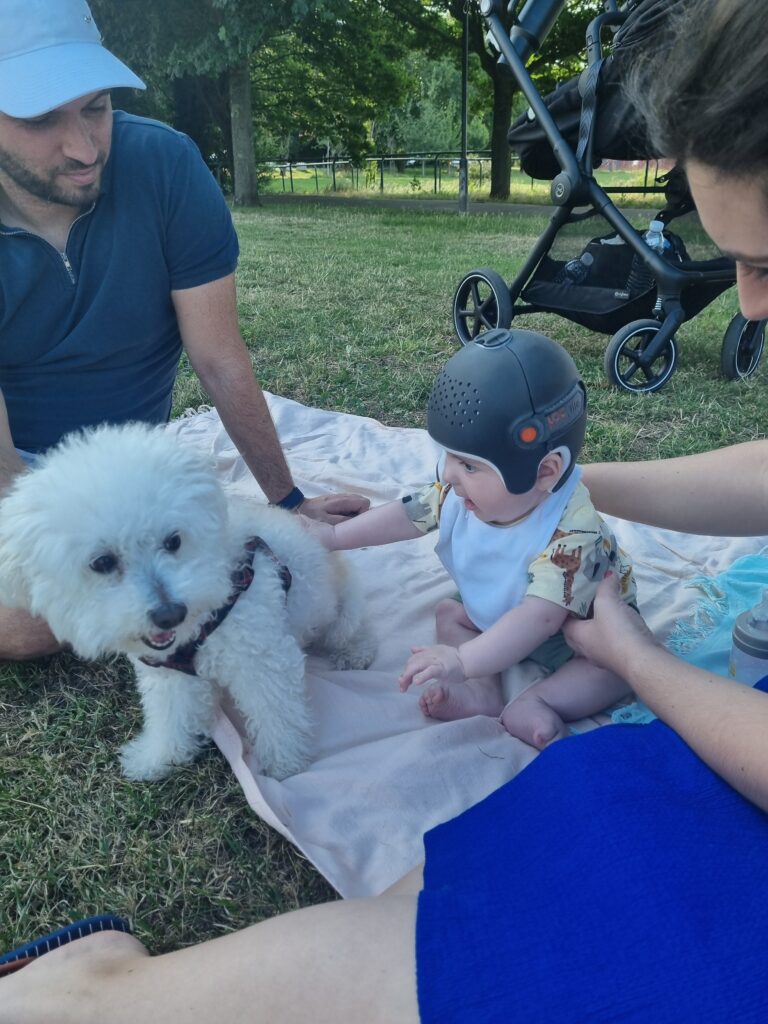
When Gabriel was born, his mum, Diana, noticed something unusual about his head shape. One of his eyes appeared more closed than the other, and his eyebrows didn’t seem to line up evenly.
“As a mum, you just know when something isn’t right. His head looked different, and I could see it straight away.”
She raised her concerns with her GP but was told it was likely due to the birth and that it was too early to tell. As Gabriel grew, his head shape became more noticeably uneven, so Diana returned to the GP. Again, there were no clear answers. Diana had given birth via caesarean section, so she wasn’t convinced by the explanation that it was caused by delivery.
Still without answers, she turned to a friend whose son had been treated for plagiocephaly using the LOCband Lite helmet. They recommended that she contact us here at LOC. Diana got in touch with one of our senior orthotists, Saeed Hamid, and sent over some photos of Gabriel’s head shape via email. Saeed arranged a telephone consultation to discuss her concerns in more detail. During the call, he identified signs of craniosynostosis, a condition where the bones of a baby’s skull join together too early and advised a referral for further investigation.
Unfortunately, Gabriel’s GP sent the wrong referral to Great Ormond Street Hospital (GOSH), so it wasn’t flagged as urgent. It delayed things at a critical time, but Diana didn’t give up. She followed up with the GP, made a formal complaint, and contacted GOSH herself to ensure the referral was received correctly.
The delay meant Gabriel wasn’t seen until he was five months old, but his surgery was finally scheduled.
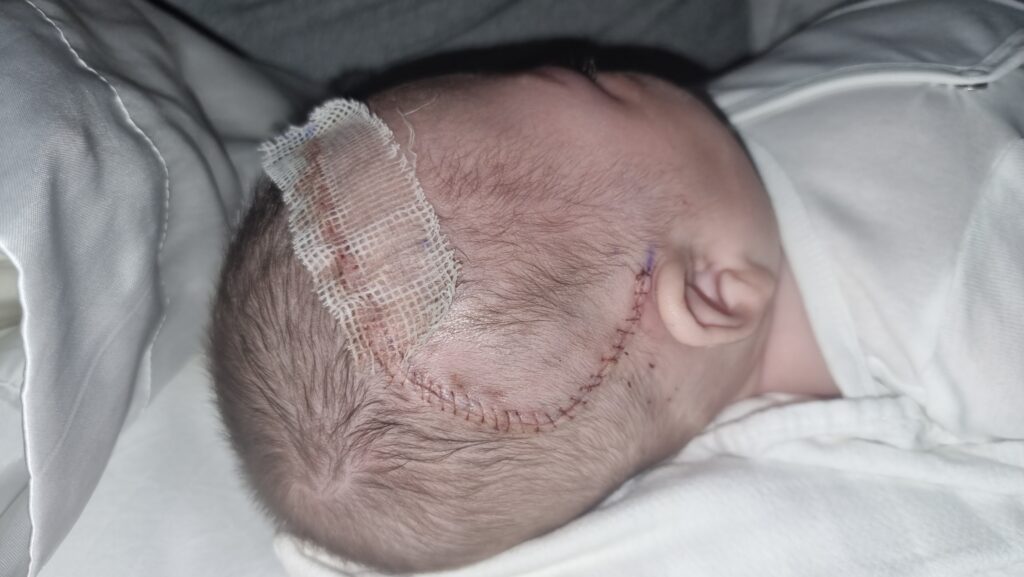
Diana later shared that learning Gabriel had craniosynostosis had been scary. She had never heard of the condition before and worried about the short- and long-term impact. But she found comfort in the care she received from the craniofacial team at GOSH, who provided ongoing support and reassurance throughout his c
Gabriel’s surgery took place on the day he turned five months old. His parents had prepared for a difficult recovery, but Gabriel surprised them all. Diana shared that she had expected him to be upset or in pain, but instead, he was strong.
“he was a warrior. We were the ones crying, seeing all the bandages on his head, but he handled it better than we expected.”
Diana
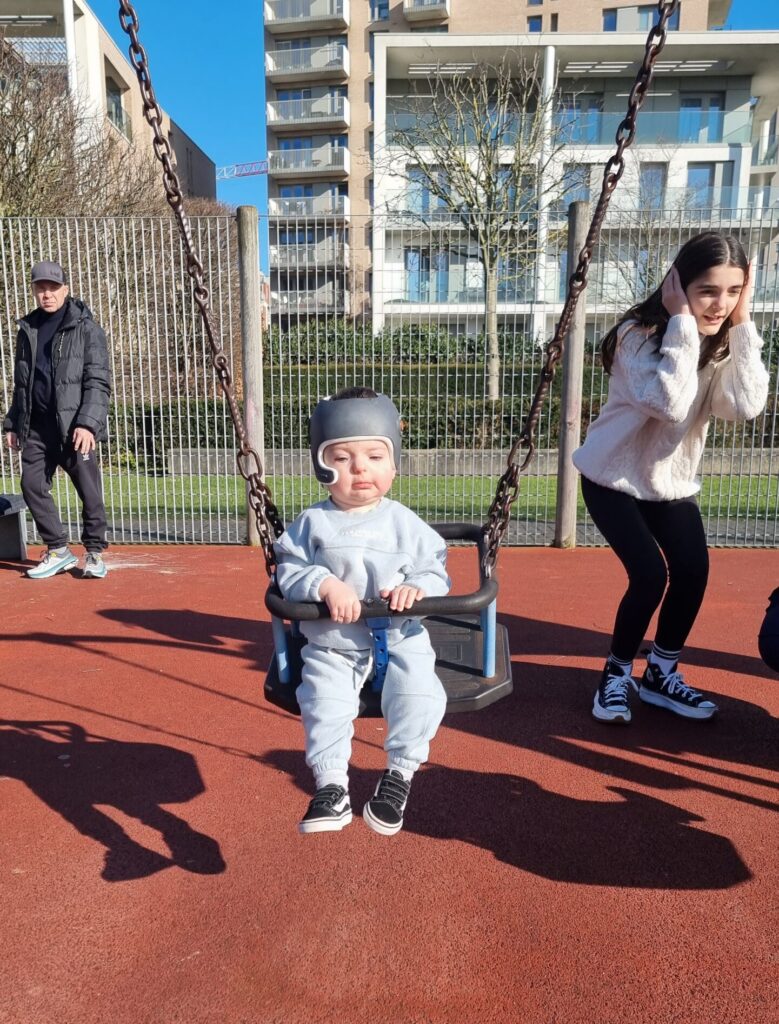
Two weeks after surgery, Gabriel came to our Kingston clinic to start helmet treatment with Saeed. A 3D scan was taken to create his bespoke LOC Cranioband Lite helmet, and the family started helmet treatment shortly afterwards. Gabriel adapted well to wearing his helmet and had no trouble sleeping in it. He continued treatment with regular reviews at the clinic and was later seen by Jo Drake, Head of plagiocephaly treatment.
“Jo was amazing, so thoughtful and reassuring. She made us feel comfortable and always explained what was happening.”
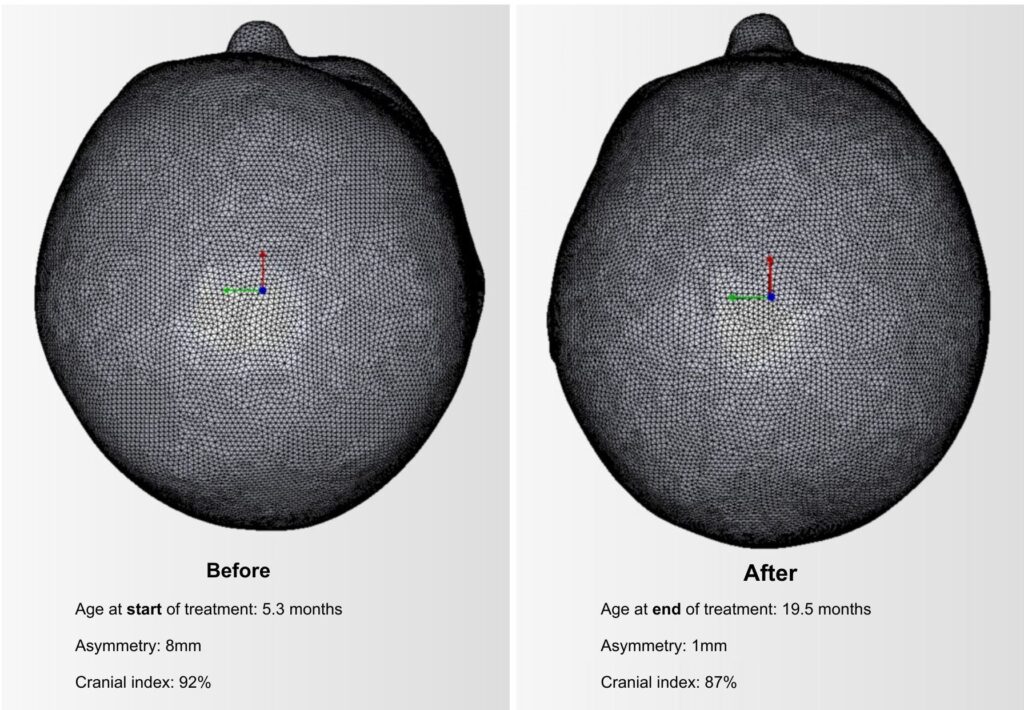
At the start of helmet therapy, Gabriel’s asymmetry measured 8 mm. After wearing his LOC Cranioband Lite, it was reduced to 1 mm, well within the normal range. Gabriel wore the helmet for around a year, using two helmets throughout the course of his treatment to accommodate his growth. The warmer months made it a bit more challenging at times, but the results were clear.
Gabriel is doing brilliantly. He is happy, thriving and his head shape is now well within the normal range.
If you’re concerned about your baby’s head shape, we’re here to help. You can complete our free flat head photo assessment form or contact us to book a consultation with one of our experienced orthotists.
The advanced, 3D-printed LOC Cranioband Lite is designed and manufactured in the UK as part of our in-house orthotic service.

Have a question about your condition or treatment options? We’re here to help.
Simply complete our contact form, and a member of our team will get back to you to answer your questions and help you understand the next steps.
