Speak to our team about your options, with no obligation to begin treatment.
If you can’t find a suitable appointment, please contact us and our admin team will be happy to help.
We use cookies where necessary to allow us to understand how people interact with our website and content, so that we can continue to improve our service.
We only ever receive anonymous information, and cannot track you across other websites.
View our privacy policyAt the London Orthotic Consultancy, we specialise in the orthotic treatment of children with cerebral palsy to help manage symptoms, improve mobility, increase stability, and support long-term musculoskeletal health.

Cerebral palsy (CP) is a group of neurological disorders that affect movement, muscle tone, and posture. It’s caused by damage to the brain that happens before, during or shortly after birth.
While cerebral palsy is a lifelong condition that varies from person to person, physical therapy and bespoke orthotics can help people with cerebral palsy move more easily and independently.
At LOC, our approach to cerebral palsy treatment is guided by both clinical experience and published research. Our team has contributed to research on AFO treatment in children with cerebral palsy, and we have also shared a case report showing how AI-assisted gait analysis can help measure the benefits of carbon-fibre AFOs.
Cerebral palsy is an umbrella term that includes a whole range of symptoms and severities and is unique to each person.
For some people, cerebral palsy will affect them physically, with muscle tightness and involuntary movement making muscle movements more difficult. Others may have a learning disability or experience seizures, epilepsy or difficulties with speech and language.
Not all symptoms are visible at birth and may become more obvious as a baby develops.
The following terms describe the area of the body affected:
This is the most common form of cerebral palsy, when the muscles are stiff and tight which leads to uncontrolled movements.
Characterised by involuntary movements, such as twisting, writhing, or sudden jerking. This can affect the whole body, including the face and tongue, leading to difficulty speaking and swallowing.
Affects balance and coordination. People with ataxic cerebral palsy have shaky or unsteady movements, tremors, difficulty with precise tasks like writing, and trouble with walking or depth perception.
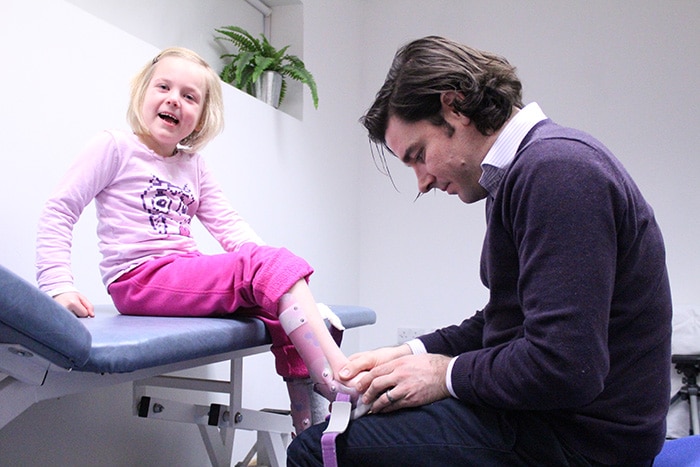
At LOC, we specialise in designing clinically-led, bespoke orthotics that make a meaningful difference to patients with cerebral palsy. Our orthotics don’t just offer support, they’re precision tools used to improve mobility, stability and gait, based on in-depth assessment and advanced biomechanical analysis.
Every orthosis we create is the result of careful planning, goal-setting and fine-tuning, tailored to support each child’s development and unique functional needs. Giving children the best possible foundation for movement, independence and participation.


The Optimal Segmental Kinematics and Alignment approach to Rehabilitation (OSKAR) is a therapeutic approach involving the use of orthoses for children and adults with conditions that affect the lower limbs including cerebral palsy and spina bifida.

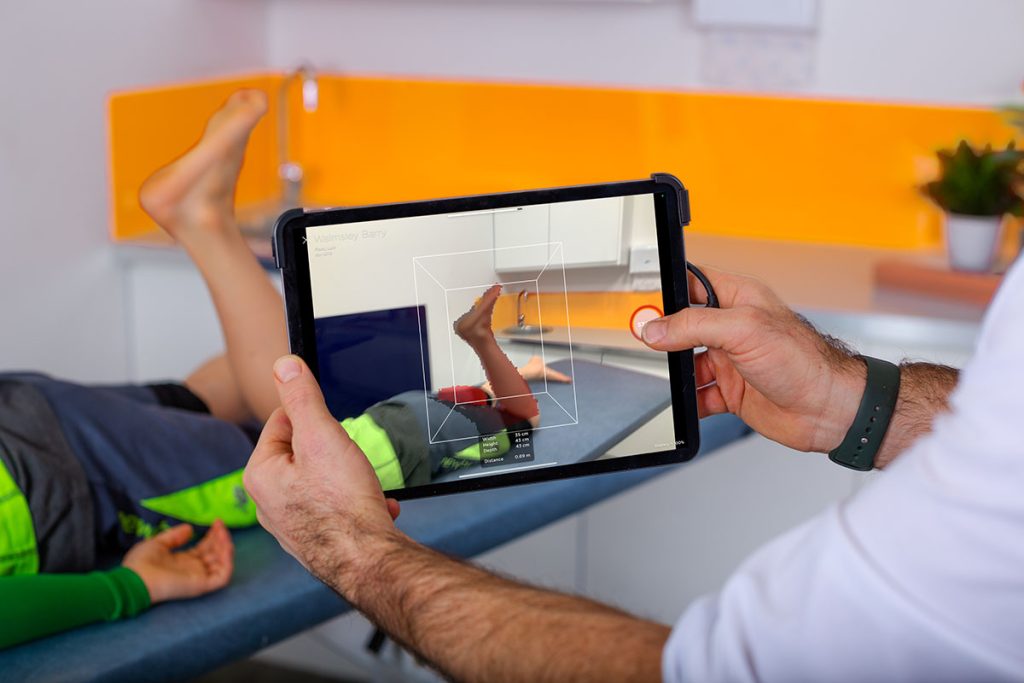
Video vector gait lab analysis helps us assess your walking pattern before and after your lower-limb orthotic fitting.
Orthotics play an important role in helping children transition to improved mobility and function after SDR surgery. By providing stability, promoting alignment and enhancing movement.
Speak to our team about your options, with no obligation to begin treatment.
If you can’t find a suitable appointment, please contact us and our admin team will be happy to help.