
Have a question about your condition or treatment options? We’re here to help.
Simply complete our contact form, and a member of our team will get back to you to answer your questions and help you understand the next steps.
We use cookies where necessary to allow us to understand how people interact with our website and content, so that we can continue to improve our service.
We only ever receive anonymous information, and cannot track you across other websites.
View our privacy policyAt just a few weeks old, concerns were raised about Gabriel’s head shape and he was later treated for metopic craniosynostosis. After a successful procedure at Great Ormond Street Hospital, Gabriel was referred to us for helmet therapy to support his recovery. This is his journey from early concerns through to cranial remoulding with the LOCband Lite.

When Gabriel was born, his mum didn’t immediately realise there was anything unusual about his head shape. As a new parent recovering from a caesarean birth, it wasn’t something she expected to see.
On the second day after giving birth, she contacted her GP. She was concerned, but the GP advised waiting six weeks, explaining that head shape can be affected by the delivery and often settles with time.
A few weeks later, during the Christmas period, Gabriel developed a rash and was taken to A&E. While there, a doctor asked whether there were any other concerns. His mum mentioned she was still worried about his head shape and that conversation led to a referral to Great Ormond Street Hospital (GOSH).
Following a four-week wait, Gabriel was seen by the specialist team at GOSH and diagnosed with metopic craniosynostosis, a condition where the metopic suture at the front of the skull closes earlier than it should. He was booked for endoscopic strip craniectomy surgery.

Gabriel’s surgery took place in March 2024 and lasted around 90 minutes. Just a few hours later, he was awake and smiling.
Georgiana, Gabriel’s mum, shared: “It was scary to know that our little one was going under surgery, but we trusted the doctors, and we knew everything would be fine.”
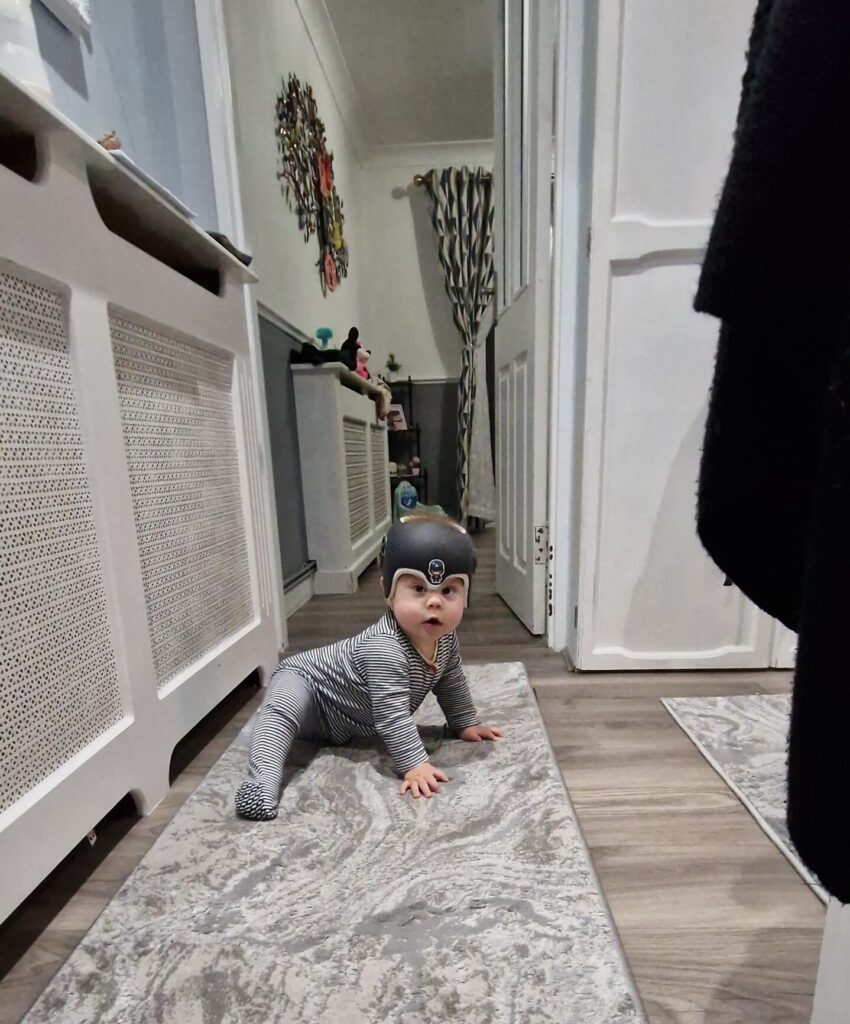
After his surgery, Gabriel was referred to us for cranial remoulding treatment to support the reshaping of his skull during recovery. He met with Jo Drake, one of our specialist orthotists, for his first assessment.
At that appointment, Jo confirmed that Gabriel’s head was symmetrical, but he had a trigonocephalic shape meaning it appeared narrow at the front. She also observed a slight slope to the forehead and hypotelorism (a reduced distance between the eyes), which are common features of metopic craniosynostosis.
His head circumference measured at the 25th percentile, and his cephalic index (the ratio of head width to length) was within the normal range. He wasn’t yet sitting or rolling independently, but there were no concerns about his neck strength or development at that stage.
Gabriel was fitted with his helmet the following week, and he adapted to it well.
“I am very pleased with Jo,” said Georgiana. “She was very professional, and the service she provided was outstanding. We’re very grateful for all the help, you can see a big difference when you look back at the photos.”
Georgiana
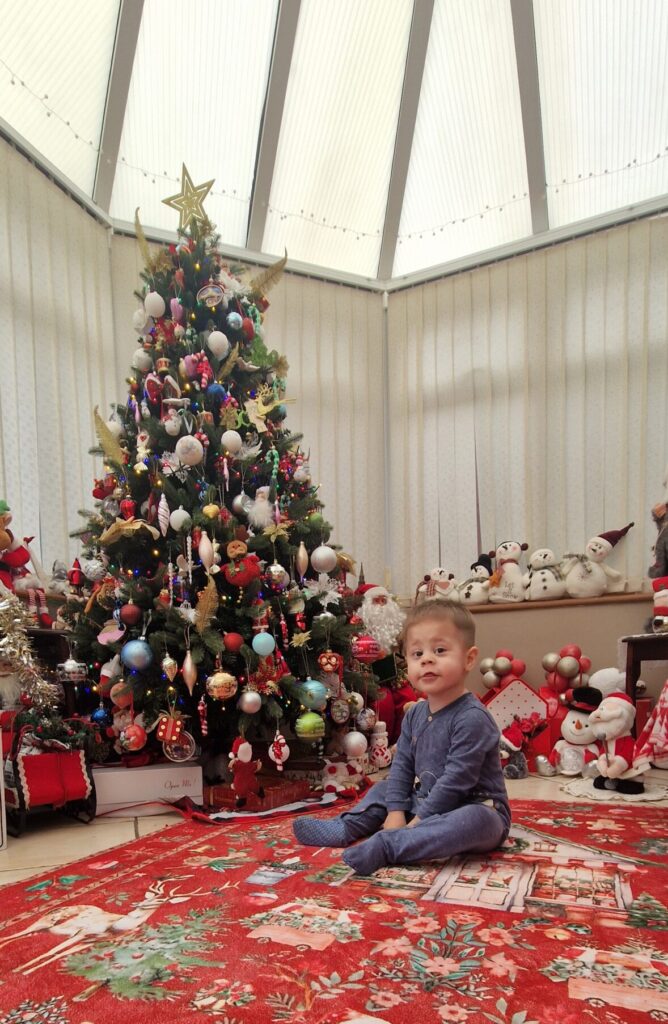
Over the course of treatment, Gabriel’s helmet was carefully adjusted to guide the natural growth of his skull. At his final review, Jo recorded a 4 mm increase in head circumference, a 1% increase in cephalic index (remaining within the normal range), positive growth across both diagonals of the head, and no asymmetry (0 mm).
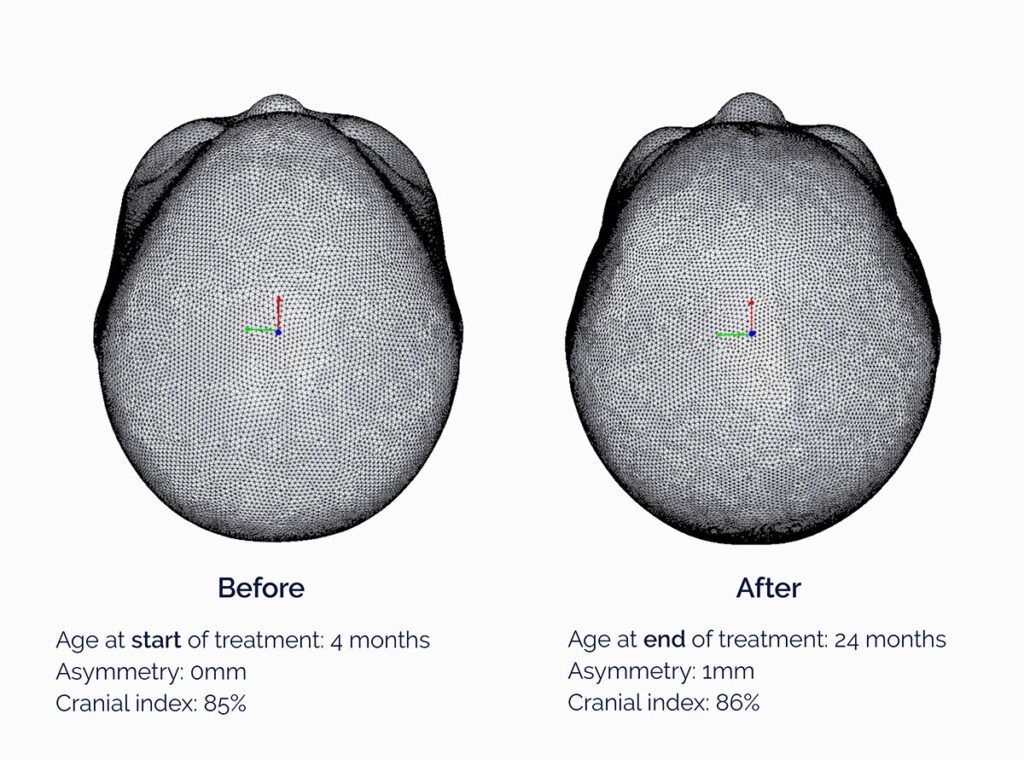
At Gabriel’s final review, Jo noted that his head shape had improved well during the helmet treatment. Taking into account his age and the family’s goals, it was agreed that this was the right time to finish wearing the helmet. Final scans and measurements were taken to record his progress, and Gabriel completed his helmet treatment with us.
The advanced, 3D-printed LOC Cranioband Lite is designed and manufactured in the UK as part of our in-house orthotic service.

Have a question about your condition or treatment options? We’re here to help.
Simply complete our contact form, and a member of our team will get back to you to answer your questions and help you understand the next steps.
