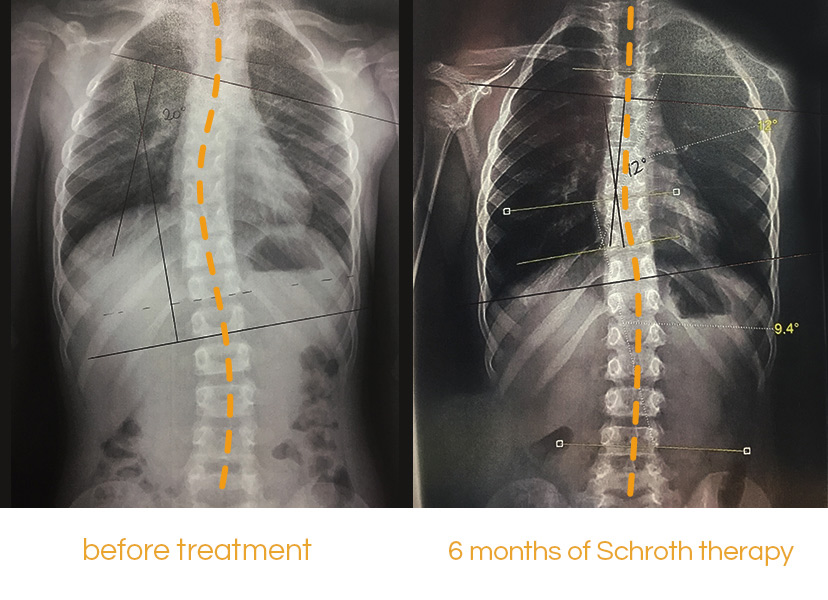
For parents of young children who have recently been diagnosed with scoliosis (a sideways curvature of the spine), it can feel like a lot to take in. For some children, curves can change over time as they grow, so families are often looking for clear information and support early on.
This story shares one child’s experience over a nine-month period. Everyone’s scoliosis is different and outcomes vary, depending on factors such as age, growth, curve type and how well a plan can be followed.
One family’s journey
One common misconception about scoliosis is that surgery is the only option. In some cases, non-surgical management such as bracing and specialist physiotherapy may be considered, particularly in growing children.
Over nine months, this seven-year-old and her family committed to a home exercise programme set by a Schroth-trained physiotherapist. Alongside school, she also kept up with Capoeira and swimming several evenings a week.
Her parents remember how overwhelming the early days felt.
“We spent the whole night looking online for scoliosis treatment in the UK when she was first diagnosed,” her mother says. Her father signed up to Facebook so they could connect with other families and learn from shared experiences.
After searching online, they found our Kingston clinic and booked an appointment to explore orthotic bracing options and understand what support might be appropriate.
Changes they noticed at home
Her mother says they began to notice visible changes over time, particularly in posture.
“When my mother visited in May for her first communion, the last time she’d seen her before that was in December and she had noticed her better posture. Even since then her posture has improved… her rib hump was quite visible then, but now if she bends over, it’s much better,” she says.
As with all scoliosis management, it’s important to remember that visible changes and measured changes do not happen in the same way for everyone.
Why early support mattered to them
Scoliosis can sometimes run in families. In this case, the child’s mother also has scoliosis and had spinal fusion surgery in the past. She says her own experience motivated her to seek early guidance for her daughter and to understand the non-surgical options that might be available.
“If they already have the diagnosis, look online and try and find other people with the condition and meet people, talk to them. Read all you can about it, as many people don’t understand the condition,” she says.