Due to the Microsoft outage, our email is down and some appointments may be affected. If you have a question about your appointment, treatment or anything else, please call us on 020 8974 9989.

Spotting the signs of scoliosis

This information is for general education. If you suspect you have scoliosis, consult your GP or orthopaedic specialist for formal medical diagnosis.

Scoliosis is when the spine curves and twists, often developing during childhood or adolescence. In the United Kingdom, around three to four in every 1,000 children have some form of scoliosis, and it’s more common in girls than boys.

While scoliosis can affect people of all ages, it’s most often diagnosed between the ages of 10 and 15, during growth spurts. This type is called adolescent idiopathic scoliosis. But scoliosis can also develop in children and adults in later life due to other conditions.

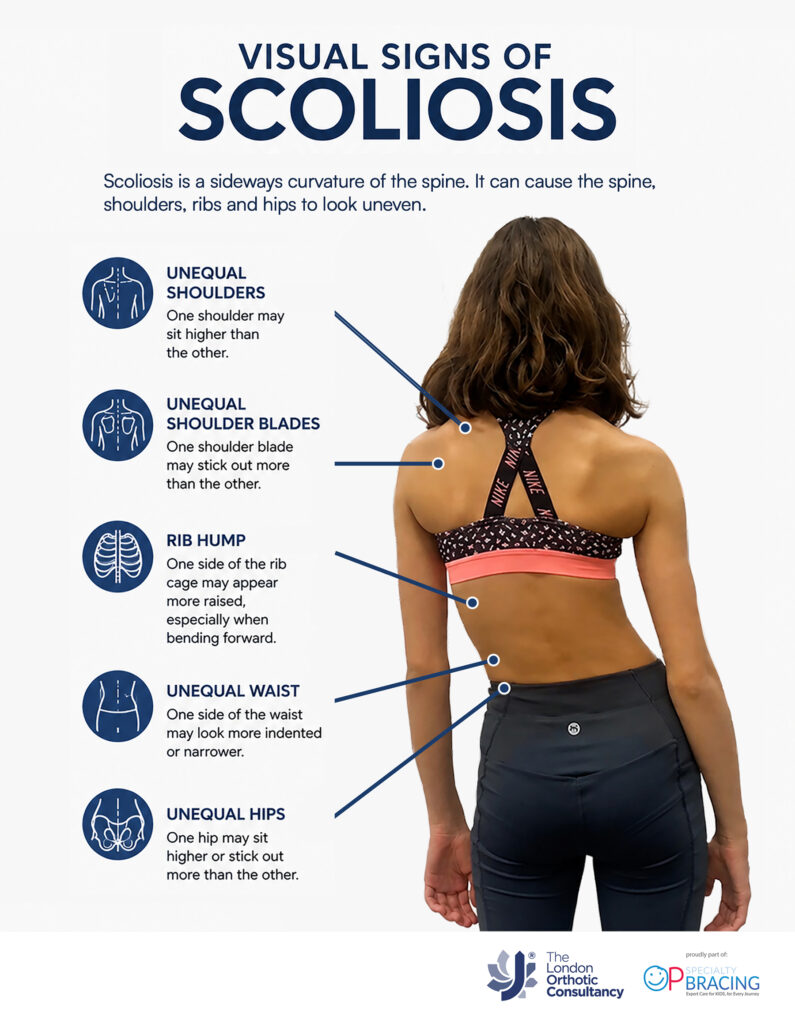
How to spot some of the visual signs of scoliosis including: uneven shoulders, uneven shoulder blades, a raised area of the ribs, an uneven waist and uneven hips.
How to spot the visual signs of scoliosis

Why early detection matters

Routine scoliosis screening is not currently offered in UK schools, so parents and carers may be the first to notice changes in a child’s posture.

Scoliosis often develops gradually and may become more noticeable during periods of rapid growth. Recognising the possible signs can help you seek medical advice and arrange an appropriate assessment.

So, how can you tell if your child may be showing signs of scoliosis? Here is what to look for.

Common signs of scoliosis

If you notice any of these signs in your child, it may be worth getting them checked:

  • a visible curve in their spine
  • one shoulder sitting higher than the other
  • hips or waist looking uneven (one side sticking out more)
  • ribs sticking out on one side (known as a ‘rib hump’), especially noticeable from the back
  • head not sitting straight over the body when standing
  • trouble standing up straight
  • back pain
  • one leg appearing longer than the other
  • a noticeable rib cage
  • pain, tingling, or numbness in the legs (caused by nerve pressure)

For more information about recognising scoliosis in children, our partners at Scoliosis SOS have put together a helpful guide to the early signs of scoliosis in children, including what parents should look out for and when to seek medical advice.

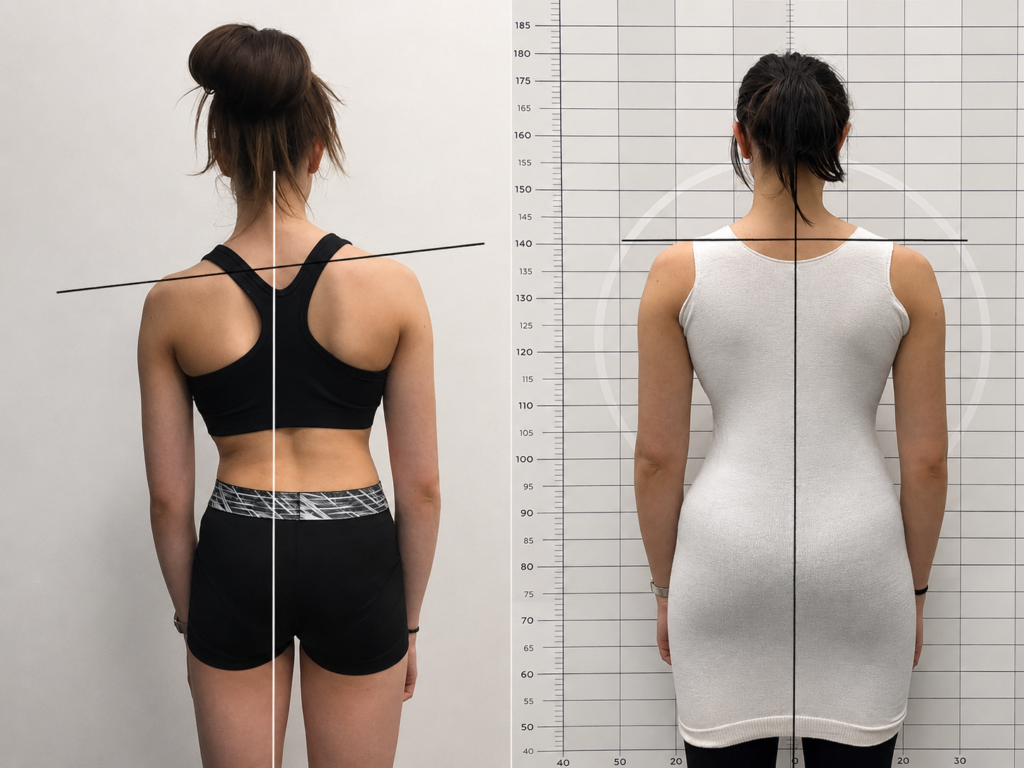
Adolescent scoliosis patient showing spinal curve before and after bracing treatment at the London Orthotic Consultancy
Adolescent idiopathic scoliosis patient before and after bracing treatment at LOC.
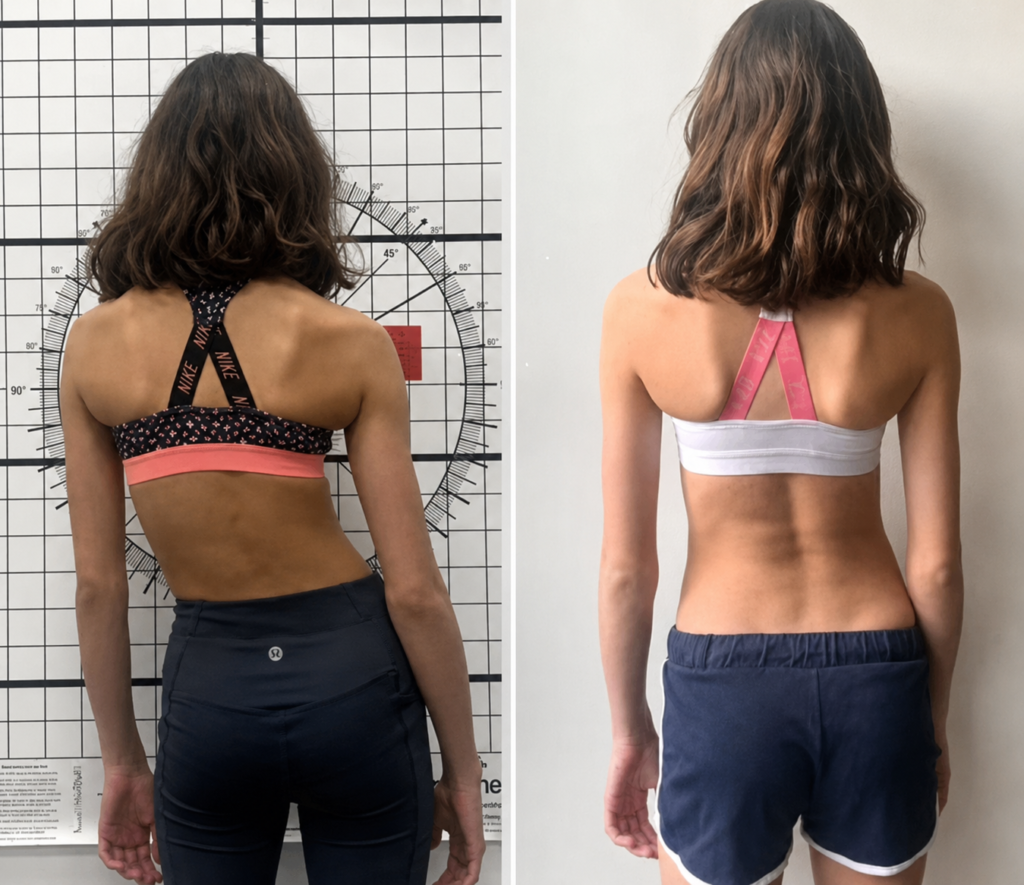
Female adolescent scoliosis patient before and after bracing treatment showing an improvement in posture and a reduction in the spinal curve
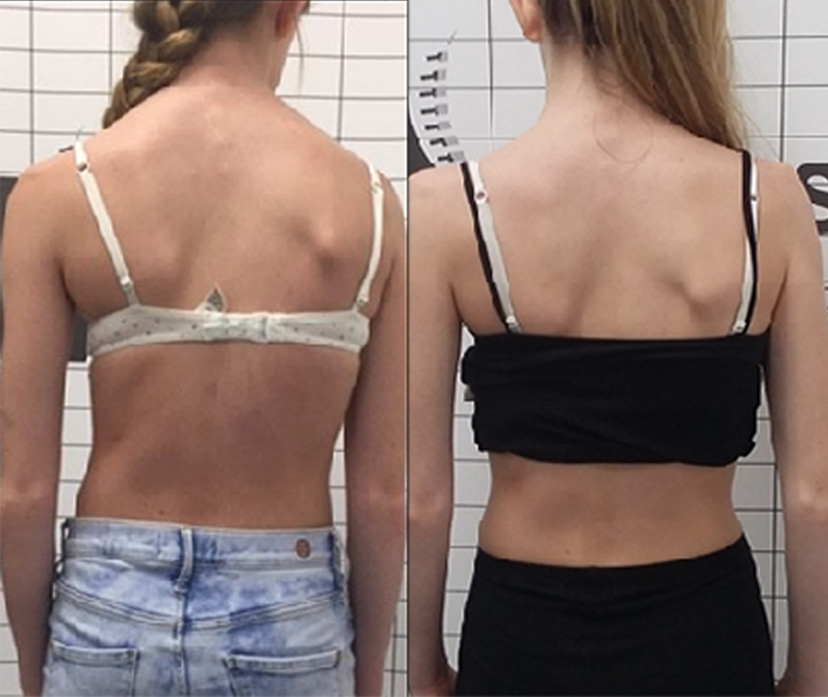
Another adolescent scoliosis patient displaying the visual signs of scoliosis on the left, and showing an improvement after bracing treatment on the right.

What to do if you’re concerned

If you think your child may have scoliosis, speak to your GP. They can assess your concerns and refer your child to an appropriate medical specialist if further investigation is needed.

If your child has already been diagnosed with scoliosis and you would like to explore orthotic bracing, LOC offers a free online consultation with one of our specialist orthotists.

During this 15 minute video consultation, you can ask questions, discuss the information provided by your child’s medical team and learn more about what an orthotic assessment involves. If appropriate, we can then arrange a face to face assessment at one of our clinics.

You can book a free online assessment with one of our specialist orthotists or, if you are unsure which appointment you need, contact our team and we will be happy to help. You can also learn more about The LOC Scoliosis Brace and how it may support scoliosis management during growth.

A lightweight, custom 3D scoliosis brace designed to optimise in-brace correction

A bespoke brace can help reduce the risk of progression during growth and support curve management as part of a wider care plan. Our brace works by gently guiding your spine into a more corrective in-brace position, with follow-up and adjustments to support fit and comfort.


“LOC has been fantastic, friendly, understanding. Anna did not pull any punches about the wearing regime and gave us all the information we needed. Polly was in her brace for less than two years. LOC has provided a really incredible service.”

Zoe, Polly’s mother – Scoliosis patient (adolescent)

Get in touch for a free online orthotic consultation

Speak to our team about your options, with no obligation to begin treatment.

Not sure which appointment to book?

  • New patients: Please book an Assessment.
  • Existing patients: Please book a Review.

If you can’t find a suitable appointment, please contact us and our admin team will be happy to help.

020 8974 9989
  • You can book a range of assessment and review appointments online, depending on the service and location that you require. If a specific appointment type is unavailable online, please contact LOC directly on [email protected] or you can call us. Unfortunately we are unable to offer fittings online at the moment.

  • Yes, if your previous orthotist offers online booking and has availability, you can choose to book with them again.

  • Please check your spam or junk folder first. If you still haven’t received a confirmation within 10 minutes, contact LOC Admin to confirm your booking via [email protected]


  • Yes. You can book on behalf of someone else. Please ensure the registration form includes the details of the person attending the appointment.

  • No account is required. Our booking process allows you to book as a guest. However, you will be asked to enter key details and complete required forms.

  • Most orthotic treatments are available online. If the treatment you’re looking for is not listed, please contact us directly and LOC Admin will assist you.

Get in touch for a free online orthotic consultation