
Speak to our team about your options, with no obligation to begin treatment.
If you can’t find a suitable appointment, please contact us and our admin team will be happy to help.
We use cookies where necessary to allow us to understand how people interact with our website and content, so that we can continue to improve our service.
We only ever receive anonymous information, and cannot track you across other websites.
View our privacy policyWondering if you have pectus excavatum? Learn how to spot key signs like a sunken chest, poor posture, and low stamina plus non-surgical treatment options that work.
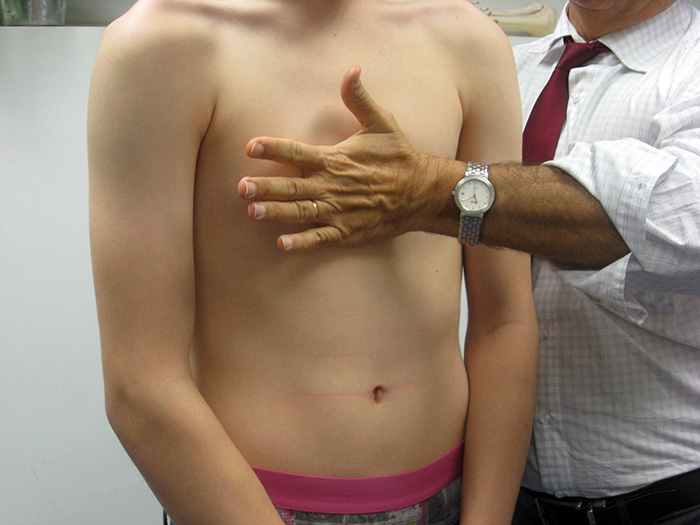
Pectus excavatum, sometimes called a “sunken chest”, is a condition where the breastbone is pressed inward, creating a dip in the chest wall. It’s the most common chest wall difference and usually becomes more noticeable during periods of rapid growth, like puberty.
For some people, it’s purely cosmetic. For others, it can affect breathing, posture, or self-esteem. If you think you or your child might have pectus excavatum, here are the key signs to look out for and when to seek advice.
The most recognisable feature of pectus excavatum is a noticeable dip or hollow in the centre of the chest. It might be:
You might only notice the shape when looking in the mirror, getting changed, or doing sports. For many, it becomes more obvious during teenage years as the body grows.
In moderate to severe cases, pectus excavatum can restrict chest expansion. This may lead to:
Not everyone experiences these symptoms, but if your breathing feels different from that of your peers or has changed over time, it’s worth getting checked.
Many people with pectus excavatum unconsciously adjust their posture to compensate for the chest shape. You might notice:
These changes can sometimes make the chest dip look more prominent, especially when combined with growth spurts.

It’s very common for people with pectus excavatum to feel uncomfortable with how their chest looks, particularly teenagers and young adults. You might:
At LOC, we understand that emotional well-being is just as important as physical health. We always take a supportive, person-centred approach to treatment.
Pectus excavatum can run in families. If a parent, sibling, or close relative has a similar chest shape, there’s a higher chance of others in the family developing it too.
If you’re not sure whether a dip in the chest is normal or inherited, a clinical assessment can help you understand what’s going on and whether any treatment is needed.
If you recognise any of these signs, our experienced clinicians can assess your chest shape and advise on the best options. Our approach includes:
You can book a free virtual consultation to start with, there’s no commitment, and it’s a chance to ask questions and explore next steps.
We’re one of the UK’s leading clinics offering non-surgical treatment for pectus excavatum. Our approach combines:
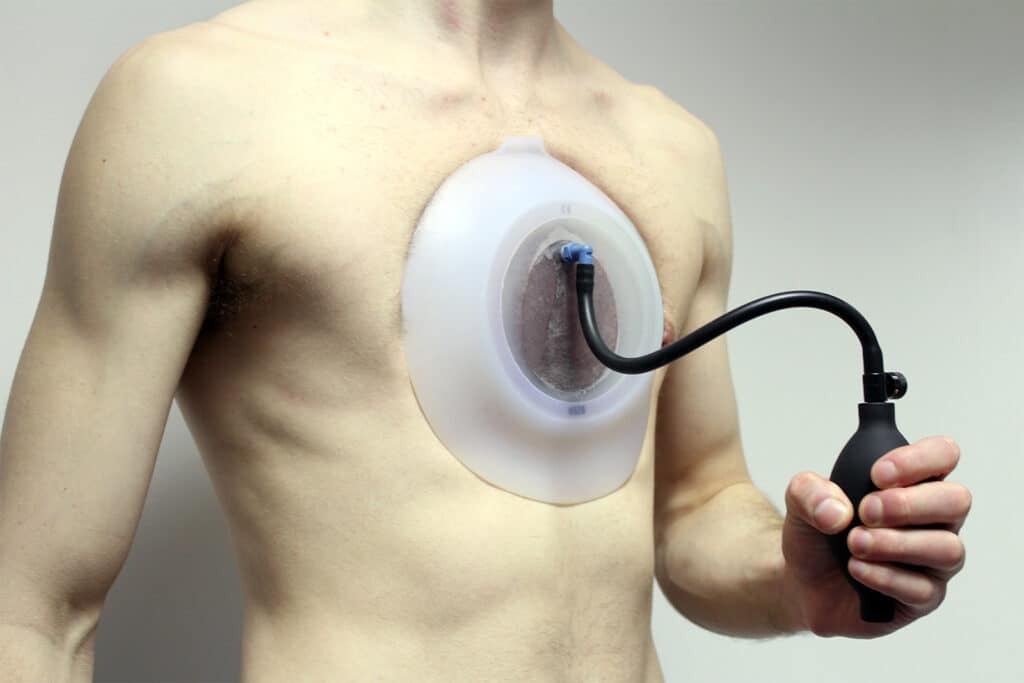
A clinically proven device that uses gentle suction to help lift the breastbone over time. Best results are seen in younger, more flexible chest walls, but adults can benefit too.
A physiotherapy-based programme to strengthen chest muscles, improve posture, and support shape change. We tailor exercises to suit your age and ability.
If there’s visible rib flaring alongside the dip, we may recommend a soft rib brace to guide the lower ribs into a more natural position.
We work closely with you throughout treatment, with regular check-ins, imaging, and support to help you get the best possible outcome.
In some cases, particularly when the sunken chest affects heart or lung function, surgery such as the Nuss procedure may be considered. At LOC, we’ll refer you to a specialist team if we feel that surgery is a better option than bracing or physiotherapy.
But for the majority of people we see, non-surgical treatment is effective and well-tolerated.
If you’ve noticed any of the following, it’s worth getting in touch:
We’re here to help you understand what’s going on and to guide you through your options.
If you think you or your child may have pectus excavatum, you don’t need to wait. Book a free virtual assessment with one of our specialised orthotists. We’ll take the time to understand your concerns and explain the most appropriate next steps.
You can also read more about pectus excavatum treatment here.


At the London Orthotic Consultancy, we support people who have been assessed with pectus excavatum or rib flaring and are considering non-surgical management options.
Since 2010, we’ve been providing pectus bracing services in the UK. Each treatment plan is personalised and may include bespoke exercises, vacuum bell therapy and a rib flaring brace depending on your individual needs and following assessment.

Speak to our team about your options, with no obligation to begin treatment.
If you can’t find a suitable appointment, please contact us and our admin team will be happy to help.
You can book a range of assessment and review appointments online, depending on the service and location that you require. If a specific appointment type is unavailable online, please contact LOC directly on [email protected] or you can call us. Unfortunately we are unable to offer fittings online at the moment.
Yes, if your previous orthotist offers online booking and has availability, you can choose to book with them again.
Please check your spam or junk folder first. If you still haven’t received a confirmation within 10 minutes, contact LOC Admin to confirm your booking via [email protected]
Yes. You can book on behalf of someone else. Please ensure the registration form includes the details of the person attending the appointment.
No account is required. Our booking process allows you to book as a guest. However, you will be asked to enter key details and complete required forms.
Most orthotic treatments are available online. If the treatment you’re looking for is not listed, please contact us directly and LOC Admin will assist you.