
Speak to our team about your options, with no obligation to begin treatment.
If you can’t find a suitable appointment, please contact us and our admin team will be happy to help.
We use cookies where necessary to allow us to understand how people interact with our website and content, so that we can continue to improve our service.
We only ever receive anonymous information, and cannot track you across other websites.
View our privacy policyLearn the difference between pectus excavatum (sunken chest) and pectus carinatum (protruding chest). Understand causes, symptoms, and non-surgical treatments.

Often described as a “sunken chest” or “funnel chest,” pectus excavatum occurs when the breastbone is pressed inward, creating a noticeable dip in the centre of the chest. This condition typically becomes more pronounced during periods of rapid growth, such as puberty. In more severe cases, it can affect posture, breathing, and even heart function.
At LOC, we use a non-surgical method known as a vacuum bell alongside as the dynamic chest compressor to gradually reshape the chest wall. This treatment is typically combined with a tailored physiotherapy programme to improve posture and muscular strength, enhancing both cosmetic and functional outcomes.

You can read Charlie’s story here
Also known as “pigeon chest,” pectus carinatum is the opposite of pectus excavatum; in this case, the breastbone protrudes outward. This condition can also become more noticeable during growth spurts. While it rarely affects internal organs, it may cause discomfort, self-consciousness, or issues with body image.
For pectus carinatum, LOC offers a bespoke chest orthosis designed to apply gentle, consistent pressure to the chest over time. Like with pectus excavatum, physiotherapy is an important part of the treatment process.
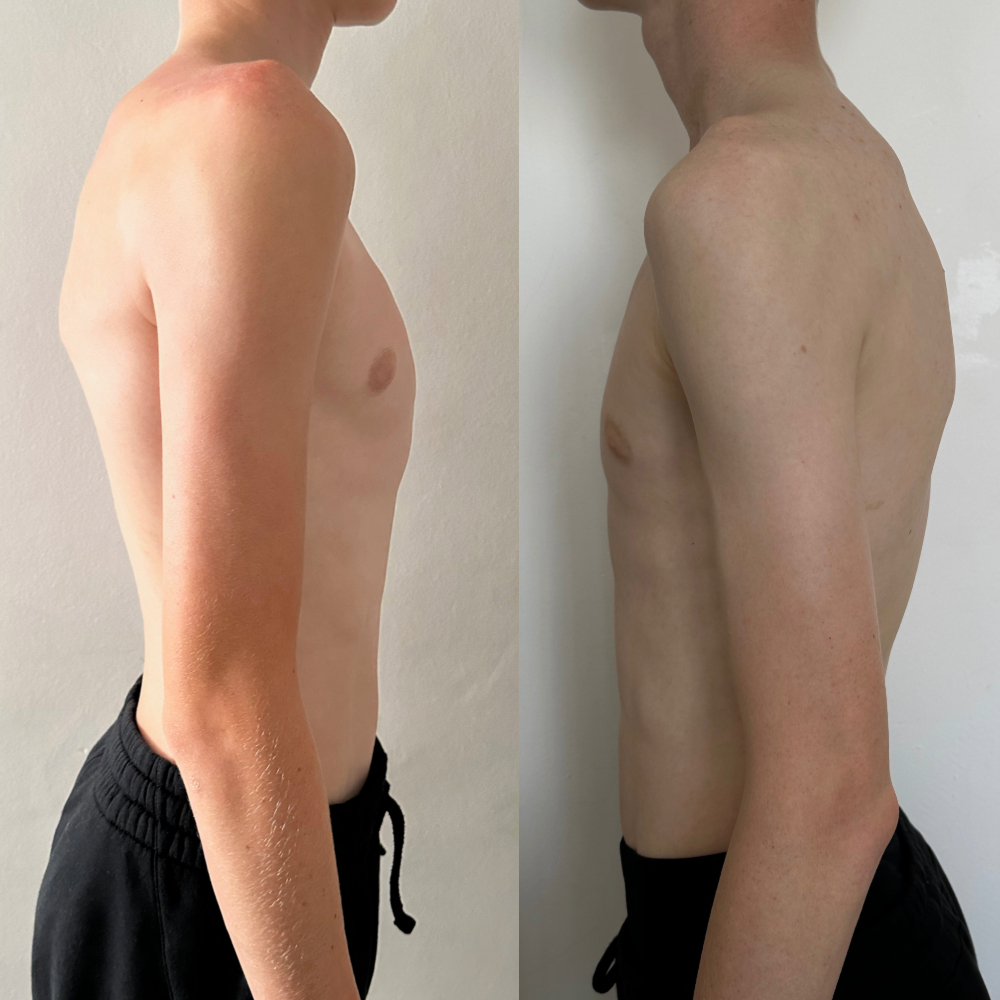
Discover Ethan’s journey and treatment experience here
Pectus deformities are conditions affecting the shape of the chest wall, and they most commonly occur during periods of rapid growth, such as adolescence.
The key difference lies in the direction of the chest wall deformity:
pectus excavatum = chest sinks inward
pectus carinatum = chest protrudes outward
Pectus excavatum is the more common of the two, affecting approximately 1 in every 300 to 400 children, and is seen more frequently in boys. Pectus carinatum is less common, with an estimated prevalence of about 1 in 1,500 children.


Symptoms can vary depending on the severity of the deformity:
At LOC, we offer non-surgical orthotic treatments tailored to each individual’s needs:
For detailed information on our treatment options, please refer to our pectus excavatum and pectus carinatum pages.
A non-surgical orthotic option designed to support improvement in chest shape and appearance, with personalised treatment from experienced orthotists.

Speak to our team about your options, with no obligation to begin treatment.
If you can’t find a suitable appointment, please contact us and our admin team will be happy to help.
You can book a range of assessment and review appointments online, depending on the service and location that you require. If a specific appointment type is unavailable online, please contact LOC directly on [email protected] or you can call us. Unfortunately we are unable to offer fittings online at the moment.
Yes, if your previous orthotist offers online booking and has availability, you can choose to book with them again.
Please check your spam or junk folder first. If you still haven’t received a confirmation within 10 minutes, contact LOC Admin to confirm your booking via [email protected]
Yes. You can book on behalf of someone else. Please ensure the registration form includes the details of the person attending the appointment.
No account is required. Our booking process allows you to book as a guest. However, you will be asked to enter key details and complete required forms.
Most orthotic treatments are available online. If the treatment you’re looking for is not listed, please contact us directly and LOC Admin will assist you.